
PVC Leather Replacement Seat vs. Original Seat Cover: The 1-Year Warranty Tradeoff in Road Use
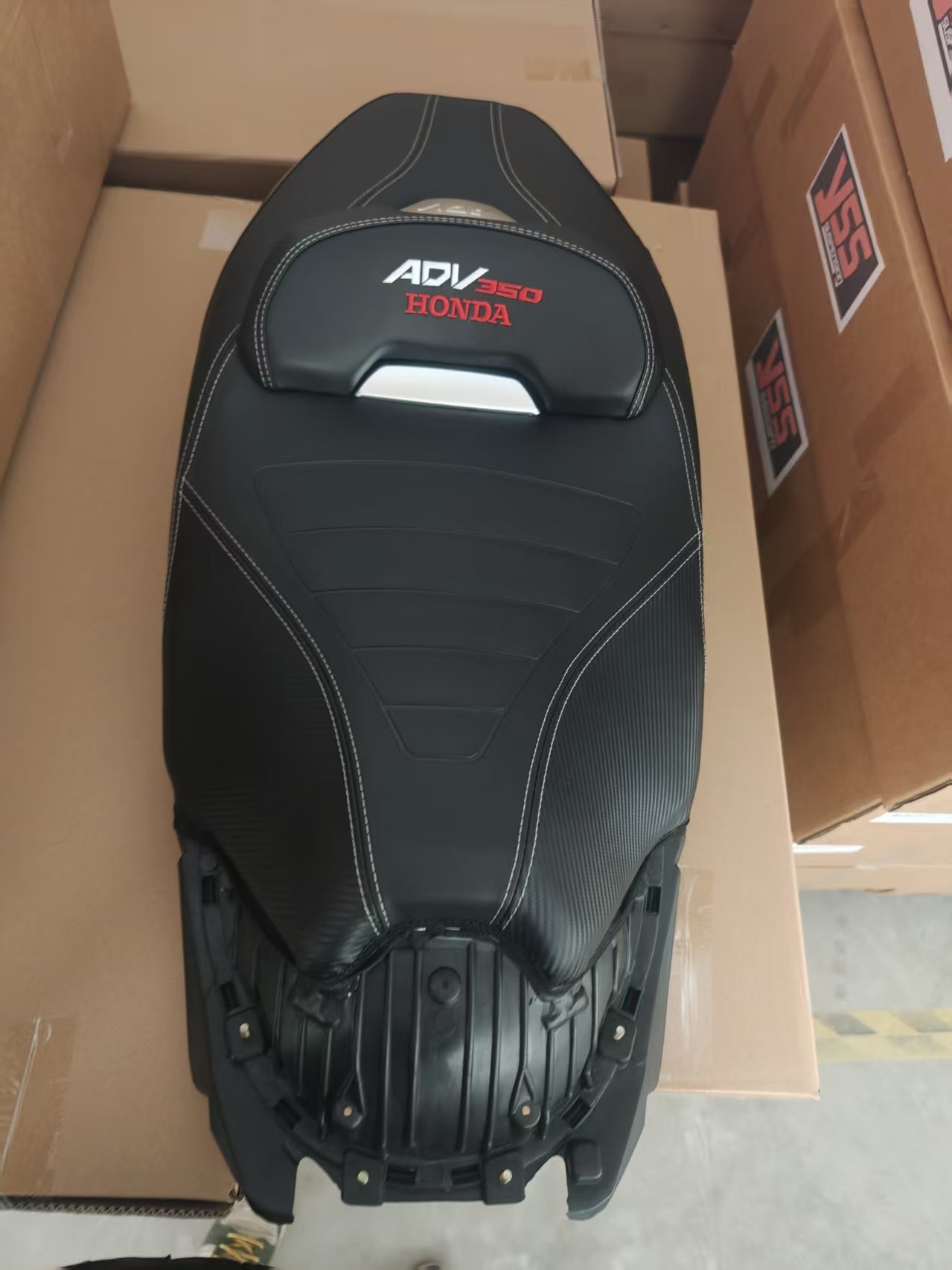
A PVC leather replacement motorcycle seat supplied for scooter platforms, shown before installation.
The short answer: an original-style seat cover restores the outer skin of a seat that is still structurally healthy, while a PVC leather replacement seat replaces the whole seating unit - cover, foam and base plate - and in this supply case is delivered with a 1-year warranty backed by 100% pre-shipment testing. For old-seat maintenance and direct replacement, the deciding factors are repair and replacement capability, waterproofing, and how much durability risk the buyer keeps after the purchase.
This article compares the two paths head to head for road use: what each option actually replaces, how each behaves in rain, sun and repeated loading, and where the 1-year warranty changes the economics of the decision. Product and process facts below come from the manufacturer, Zhejiang Xingrong Auto & Motorcycle Parts Co., Ltd (Staron), a motorcycle seat cushion manufacturer based in Taizhou City, Zhejiang Province, China.
Problem Definition: What the Buyer Is Really Choosing Between
Seat failure on a used motorcycle or scooter is rarely a single event. It is usually one of two different failure modes, and the two options in this comparison only solve one of them each.
- Surface failure: the outer cover cracks, fades, peels at the seams, or loses its grip. The foam underneath may still be usable. This is the case an original-style seat cover is designed for.
- Structural failure: the foam compresses and no longer supports the rider evenly, the floor structure weakens, or water has already reached the cushioning layer. A cover fitted over the top does not restore any of this.
In day-to-day road use - commuting, delivery work, humid and rainy seasons, continuous sun exposure - both failure modes usually appear together, because water ingress and load cycles accelerate foam degradation. That is why repair shops and parts retailers generally evaluate a replacement decision on four questions rather than one:
- How much of the seat is being replaced (cover only, or the complete unit)?
- Will the finished seat stay dry in rain, washing and humid storage?
- Will the rider notice a difference in comfort and visual finish?
- What happens if the part fails within the first year?
An original-style seat cover answers the first question narrowly and the fourth question usually not at all: it is generally a materials purchase. A PVC leather replacement seat answers all four, because it is supplied as a complete seating unit with a defined warranty period.
Industry Background: Why the Replacement Side of the Market Is So Large
The demand behind this decision is not niche. Third-party market research indicates that the aftermarket distribution channel holds the largest share of the motorcycle seat market, accounting for approximately 62.3% of revenue (Dataintelo, 2025). In other words, most seat spending happens after the vehicle is sold - replacement, repair and upgrade - not on the original production line.
Regionally, Asia-Pacific dominated the motorcycle seat market with a revenue share of 38.5% in 2025, driven by high production and sales in China (Dataintelo, 2025). Market Research Future and Dataintelo project the global motorcycle seats market at USD 7.42 billion in 2025, growing to USD 13.30 billion by 2032 at a CAGR of 8.69%.
Note on the numbers: published estimates for the motorcycle seat market size diverge significantly. Dataintelo has also published a 2025 figure of about USD 4.8 billion, while Market Research Future reports USD 7.42 billion for the same year. Buyers should treat the absolute value as directional and use the channel structure (aftermarket-led) as the more reliable signal.
Material trends follow the same logic. Leather remains a premium material for motorcycle seats, but synthetic options such as vinyl and foam-backed synthetic leather are increasingly used to deliver waterproof and soft-surface features in the mid-range segment (Fortune Business Insights, 2025). PVC leather sits in exactly that band: it is a synthetic material engineered for surface durability and water resistance rather than a prestige trim.
Compliance expectations are also tightening in regulated markets. UN Regulation No. 17 (ECE R17) establishes uniform provisions for the approval of vehicle seats, anchorages and head restraints, and remains a reference point for seat safety documentation in Europe and other adopting markets (United Nations Economic Commission for Europe, 2024). Buyers sourcing replacement seats should confirm the documentation their destination market requires rather than assume any single certificate covers all regions.
Detailed Solution: What a PVC Leather Replacement Seat Actually Delivers
Construction: three layers, not one
A PVC leather replacement seat is a complete unit built from three functional layers: a PP plate base, PU foam cushioning, and a PVC leather outer cover. The seat cushion product in this supply case uses 80D high density foam and a high-strength floor structure, and it is available in two configurations - scooter seat and dirt bike seat.
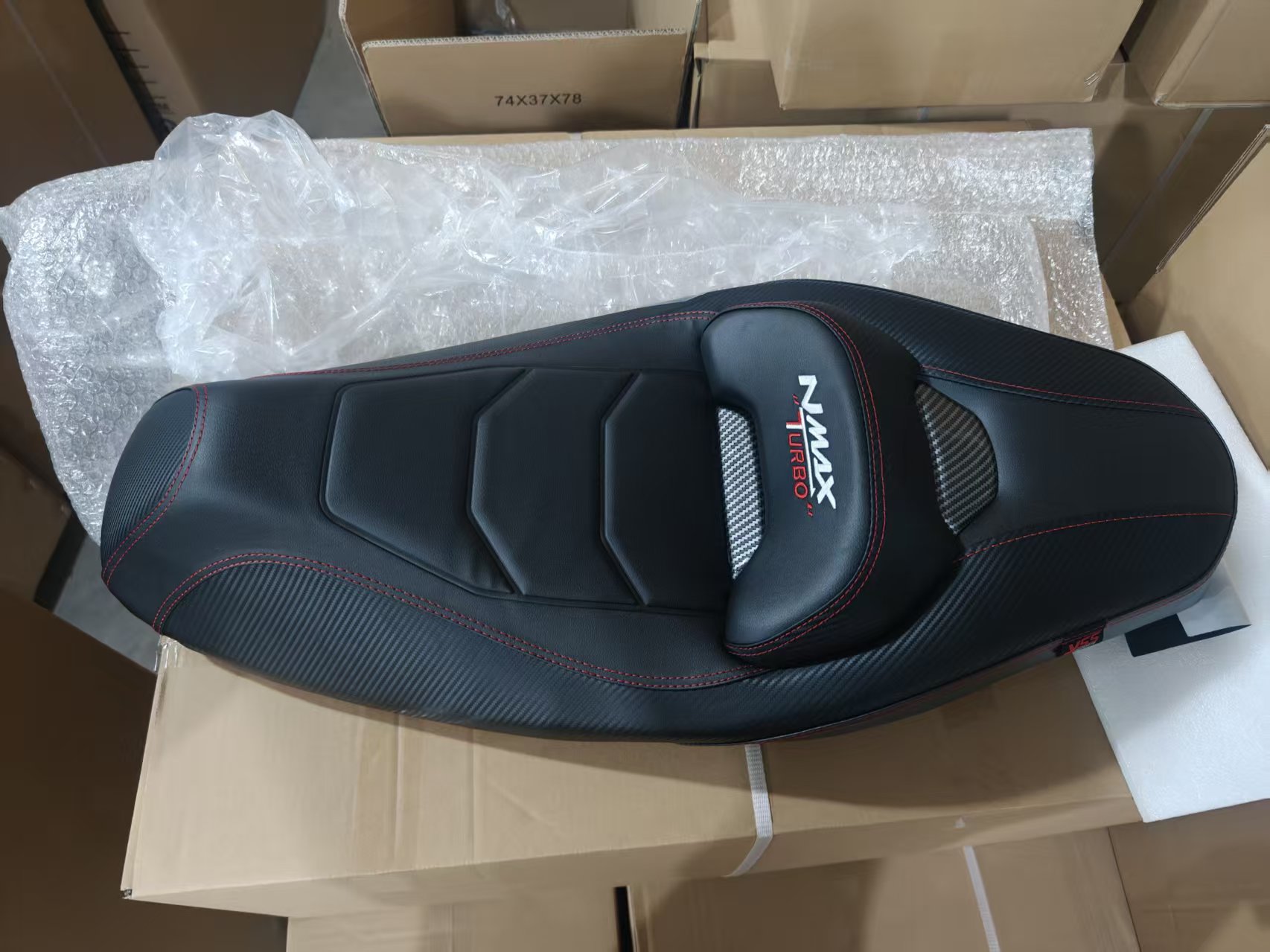
A PVC leather replacement seat for a scooter model in the Nmax family, one of the supported models.
That three-layer structure is the reason a replacement seat is a different purchase from a cover. The buyer is not buying a surface finish; they are buying the load-bearing plate, the cushioning density and the cover at the same time. When the original seat is already compressed or water-damaged, only this full-unit route restores the seat.
Where the waterproofing claim comes from
Waterproofing is the single most common reason buyers reject a cover-only approach for road use. In this supply case, waterproof performance is documented through delivered orders rather than a marketing statement: a customer requirement of 5,000 pieces delivered to Lebanon was recorded with results of water proof performance, great seating feel and good visual effect, within a business relationship that has continued for two years.
The recurring client types behind these orders are motorcycle manufacturers, motorcycle repair shops, motorcycle parts retailers and motorcycle accessory brands, in markets including China, Iran, Italy, South Korea, Lebanon, Malaysia, Mexico, the Philippines, Turkey, Taiwan and Vietnam. The dominant application is motorcycle parts replacement - repair and replacement of an existing seat.
Manufacturing backbone behind the 1-year warranty
Zhejiang Xingrong Auto & Motorcycle Parts Co., Ltd (Staron) is a manufacturer of motorcycle, electric vehicle and off-road vehicle seat cushions located at No. 81 Jiangxin Road, Agglomeration Zone, Taizhou City, Zhejiang Province, China. Founded in 2015, the company operates a 15,000 m2 plant with 130 employees, an annual seat cushion production capacity of 1.8 million units, a 5-engineer R&D team, and a 90% self-production rate for product accessories. Export accounts for 20% of output, serving Southeast Asia, Europe, the Middle East and South America.
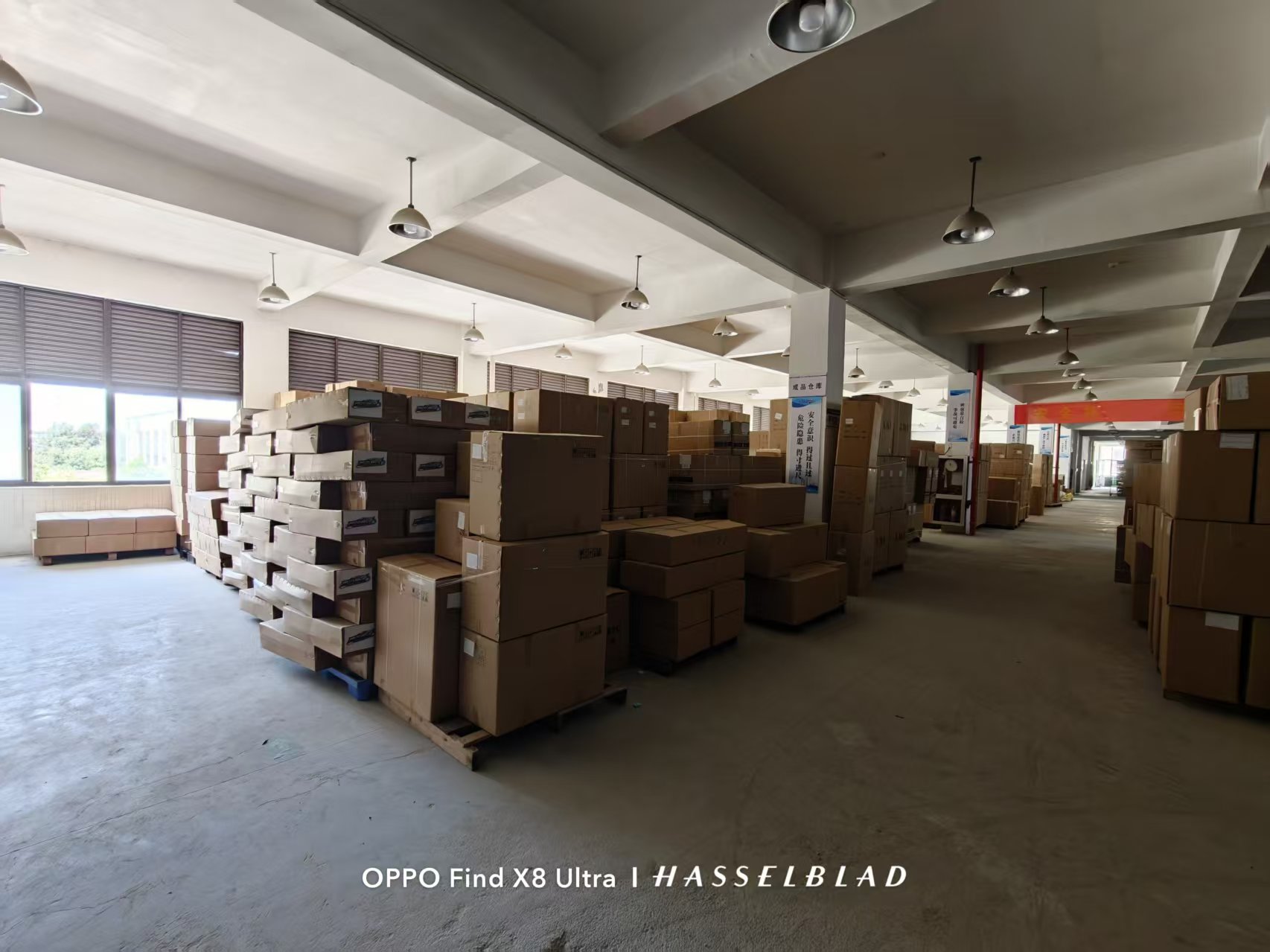
Seat cushion production inside the 15,000 m2 Taizhou plant, where the 90% accessory self-production rate is achieved.
The warranty is not the only protective mechanism. The company has passed ISO9000 quality management system certification and CQC certification, and applies 100% pre-shipment testing as a standing quality control standard. A defined 1-year warranty plus full pre-shipment testing moves part of the durability risk from the buyer back to the supplier for a fixed period - which is the core tradeoff of this comparison.
Customization scope for OEM and ODM buyers
The manufacturer provides OEM and ODM production services for motorcycle seats, and ODM services cover custom motorcycle seat development, including design and production according to client specifications. Available customization includes logo branding, leather cover design, and stitching line colour. Monthly capacity is 50,000 pieces, which is the practical ceiling that determines which model ranges a buyer can keep in stock year-round.
Step-by-Step Breakdown: How to Decide and Execute the Replacement
Use Cases: Where Each Option Fits
Repair shops and parts retailers
For shops that maintain older scooters and street bikes, the replacement seat is a repeatable SKU: it arrives as a finished unit, installs as a direct replacement, and removes the labour of re-covering a degraded seat. The 1-year warranty also gives the shop something concrete to tell a customer who asks what happens if the seat fails.
Humid and rainy markets
In Southeast Asia and other high-rainfall regions, waterproofing is a functional requirement rather than a feature. The Lebanon order record - 5,000 pieces, water proof performance, great seating feel, good visual effect - is representative of this demand pattern. A PVC leather cover layer over 80D foam is what keeps the cushioning dry in daily commuting use.
Accessory brands building a private label
ODM buyers can define the leather cover design and stitching line colour and add their own logo, then receive production against the same base specification. The 50-unit minimum order quantity makes it practical to test a new design before committing to volume.
Scooter and dirt bike applications
The product is classified in two configurations - scooter seat and dirt bike seat - so the same supplier relationship can cover a commuter scooter range and an off-road range without changing vendors. For distributors, that means one freight relationship and one quality standard across two categories.
Comparison Table: PVC Leather Replacement Seat vs. Original-Style Seat Cover
| Decision factor | PVC leather replacement seat | Original-style seat cover |
|---|---|---|
| What is replaced | The complete seating unit: PVC leather cover, PU foam and PP plate | Typically the outer cover layer only |
| Repair and replacement capability | Direct replacement of a worn or damaged seat; the old unit is retired rather than covered | Refurbishes the visible surface; structural wear underneath is generally not addressed |
| Waterproofing | Sealed PVC leather surface over foam; documented as water proof in the 5,000-piece Lebanon delivery | Water resistance depends on the cover material and how tightly it is fitted; water that reaches the foam layer is generally not resolved by the cover |
| Comfort contribution | 80D high density foam on a high-strength floor structure; recorded result: great seating feel | Existing foam condition is preserved as-is |
| Visual effect | Recorded result: good visual effect; OEM stitching colour, leather cover design and logo available | Fast cosmetic refresh; final appearance depends on fitment quality |
| Warranty and risk allocation | 1-year warranty on the supplied seat, supported by 100% pre-shipment testing | A standalone materials purchase; no seat-level warranty applies in this supply case |
| Fitment scope | Model-specific supply: Nmax, Xmax, Aerox, ADV150, ADV160, Forza, PCX, Click; scooter and dirt bike configurations | Depends on the cover pattern matching the original seat shape |
| Commercial entry point | MOQ 50 units; lead time 25-35 days; FOB/EXW; 30% T/T advance, 70% against copy of B/L | Purchasing scope limited to the cover layer itself |
| Best suited to | Old-seat maintenance where the whole unit is being replaced and the seat must survive road use | Cosmetic refresh of a structurally healthy seat |
Frequently Asked Questions
1. What quality and compliance checks apply to these motorcycle seats?
The manufacturer has passed ISO9000 quality management system certification and CQC certification. Every shipment is subject to 100% pre-shipment test, and contractual acceptance criteria can combine pre-shipment testing with third-party inspection. For regulated export markets, buyers should note that frameworks such as UN Regulation No. 17 (ECE R17) set provisions for vehicle seats, anchorages and head restraints, and should confirm which documentation their own market requires.
2. Can the manufacturer supply OEM and ODM motorcycle seats for custom models?
Yes. Zhejiang Xingrong Auto & Motorcycle Parts Co., Ltd provides both OEM and ODM production services. ODM services cover custom motorcycle seat development, including design and production according to client specifications, with customization options for logo branding, leather cover design and stitching line colour. Supported models include Nmax, Xmax, Aerox, ADV150, ADV160, Forza, PCX and Click, in scooter seat and dirt bike seat configurations. Monthly capacity is 50,000 pieces, supported by a 15,000 m2 plant, 130 employees and a 5-engineer R&D team.
3. What is the minimum order quantity and what payment terms apply?
The minimum order quantity is 50 units. Delivery terms are FOB or EXW. Payment terms are 30% T/T in advance, with the remaining 70% T/T against copy of B/L.
4. How can I validate the seat before committing to a full order?
Validation works on three levels. First, the 50-unit MOQ allows a small first batch for fitment and finish checks. Second, acceptance criteria can include third-party inspection in addition to the manufacturer's own testing. Third, 100% pre-shipment testing means every unit in the batch is checked before dispatch. Buyers can also reference delivered results: a 5,000-piece order for Lebanon was recorded with water proof performance, great seating feel and good visual effect within a two-year business relationship.
5. What is the lead time, and what does the 1-year warranty actually protect?
Production lead time is 25-35 days, with monthly capacity of 50,000 pieces. The 1-year warranty applies to the supplied replacement seat, and it is supported by ISO9000 and CQC certification plus 100% pre-shipment testing. Because the seat is supplied as a complete unit rather than a cover, the warranty covers the seating product the buyer resells or installs. To confirm fitment for a specific model or request a quotation for a first batch, contact the factory through www.zjstaron.com or email mike@zjstaron.com.
Conclusion: Choose the Option That Matches the Failure
An original-style seat cover is a legitimate repair when the seat structure is sound and only the surface has aged. It is not a solution for a seat that has lost foam height, taken on water, or weakened at the base - and it does not come with a seat-level warranty.
A PVC leather replacement seat costs more per unit but changes the risk profile of the purchase. It replaces the PP plate, PU foam and PVC leather cover together, it records water proof performance and great seating feel in delivered road-use orders, it is available for specific models from Nmax to Click in both scooter and dirt bike configurations, and it is delivered with a 1-year warranty supported by 100% pre-shipment testing and ISO9000 / CQC certified quality management.
For buyers in the evaluation and execution stage - repair shops, parts retailers, distributors and accessory brands - the practical rule is simple: if the seat is being maintained rather than cosmetically refreshed, buy the unit, not the cover.
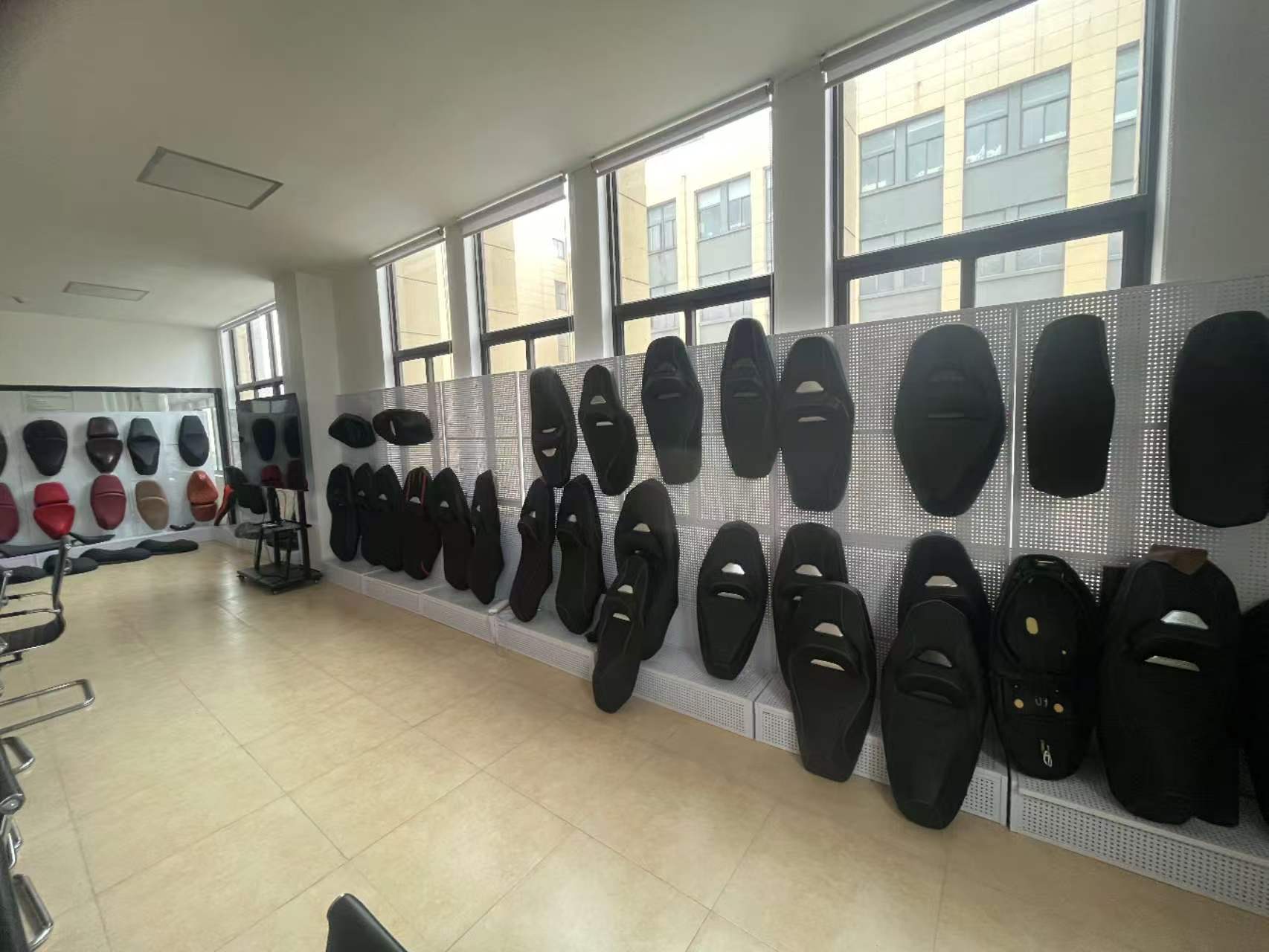
Production and pre-shipment preparation at the Taizhou seat cushion factory.
Request a Sample or a Quotation
Zhejiang Xingrong Auto & Motorcycle Parts Co., Ltd (Staron) manufactures motorcycle seat cushions for OEM and ODM projects, with a 50-unit MOQ and 25-35 day lead time. Send your model list, stitching colour and logo requirements to start a first batch.
- Website: www.zjstaron.com
- Email: mike@zjstaron.com
- Tel / WhatsApp: +86 13738695125
- Factory: No. 81 Jiangxin Road, Agglomeration Zone, Taizhou City, Zhejiang Province, China
- Catalog download: Staron Seat Cushion Catalog (PDF)
Have Questions or Need More Details?
Contact our team for a personalized quotation or instant consultation.
Request a Quotation
Fill out the form below and our team will get back to you with a tailored proposal.
WhatsApp Direct Chat
Prefer to chat in real-time? Message us on WhatsApp for instant assistance & quick answers.
- Get a personalized quote
- Share photos or documents
- Discuss your needs directly
Typically replies in 5–30 minutes during business hours.