
Motorcycle Seat Application Guide: Replacement Solutions for Repair Shops and Parts Retailers
A motorcycle seat replacement programme only works when three conditions line up: the seat fits the exact model, the build survives daily use and wet weather, and the supplier can repeat the same specification on the next order. This guide is written for repair shops and parts retailers that fit or resell replacement seats, not for a single rider shopping for one upgrade.
It answers three working questions. Which models can be served from one replacement programme, including Nmax, Xmax, Aerox, ADV150, ADV160, Forza, PCX and Click? What separates a seat that survives two rainy seasons from one that comes back as a complaint? And how is a replacement order actually structured: model matching, inspection, minimum quantity, payment terms, spare parts and long-term supply?
The specifications and project details referenced in this guide come from Zhejiang Xingrong Auto & Motorcycle Parts Co., Ltd. — trading as Staron, based at No. 81 Jiangxin Road, Taizhou City, Zhejiang Province, China — a manufacturer of motorcycle, electric vehicle and off-road vehicle seat cushions.
Why Seat Replacement Is Harder for Repair Shops and Parts Retailers Than It Looks
The difficult part of seat replacement is rarely the seat itself. It is the match between seat, model and stock rotation. A repair shop that services eight scooter models cannot hold eight slow-moving single units, and a parts retailer cannot absorb returns caused by a foam density that felt wrong to the customer.
Five failure points repeat across the replacement channel:
- Model coverage, not model count. Knowing that a seat fits a 150 cc scooter is not the same as confirming fit for a specific machine. Seat pans can differ between displacement variants of the same family, so fitment has to be confirmed model by model rather than by category.
- Ride-feel mismatch. A comfortable motorcycle seat for a daily commuter is a different specification from a soft motorcycle seat chosen for long-distance touring. Foam density and hardness decide whether the customer keeps the seat or returns to the counter.
- Water ingress. Water leakage is one of the two failure modes that generate after-sales claims on replacement seats; the other is physical damage during transport. Both are managed through systematic controls rather than one-off visual checks.
- No spare parts, no repeat business. Contingency plans in a properly structured seat programme include the supply of replacement spare parts to address damage after delivery. A shop without that fallback absorbs the loss itself.
- Acceptance evidence. Retailers increasingly need a documented checkpoint before stock reaches the shelf: products are accepted through third-party inspection procedures, and acceptance inspection includes a pre-shipment test.
Framed this way, seat replacement is a supply problem wearing a product problem’s clothes. The technical requirements are stable, but they only pay off when fitment, materials and replenishment are planned as one programme.
Industry Background: The Replacement Channel Drives Motorcycle Seat Demand
The replacement channel, not new-vehicle assembly, is where most motorcycle seat revenue sits. The global motorcycle seats market was valued at USD 7.42 billion in 2025 and is projected to reach USD 13.30 billion by 2032, a CAGR of 8.69% (Market Research Future / Dataintelo).
Reported market values vary between research houses — one Dataintelo estimate puts the 2025 market at USD 4.8 billion — so the growth direction is more reliable than any single absolute figure. Two structural facts matter more to a repair shop or parts retailer than the headline number:
- The aftermarket is the largest channel. The aftermarket distribution channel holds approximately 62.3% of motorcycle seat revenue (Dataintelo, 2025). The channel that repair shops and parts retailers operate in is the largest single revenue pool in the category.
- Manufacturing capacity is concentrated. Asia-Pacific accounted for 38.5% of motorcycle seat revenue in 2025, driven by high production and sales volumes in China (Dataintelo). That is also where most replacement seat manufacturing capacity sits.
Material demand is shifting in parallel. Leather remains a premium material for motorcycle seats, while synthetic options such as vinyl and foam are increasingly used for waterproof and soft surface features in the mid-range segment (Fortune Business Insights). That mid-range segment is where most replacement purchases happen, and it is why PVC leather covers dominate practical replacement stocks.
Regulation is a separate layer. UN Regulation No. 17 (ECE R17) establishes uniform provisions for the approval of vehicle seats, anchorages and head restraints (United Nations Economic Commission for Europe). Not every replacement seat falls inside that approval scope, but buyers selling into regulated markets should confirm which framework applies to the model they are fitting and ask the supplier for the documentation that supports it.
For a repair shop or parts retailer, the practical reading of this background is straightforward: demand for replacement seats is structural rather than seasonal, and the competitive difference sits in supply quality, model coverage and repeatability.
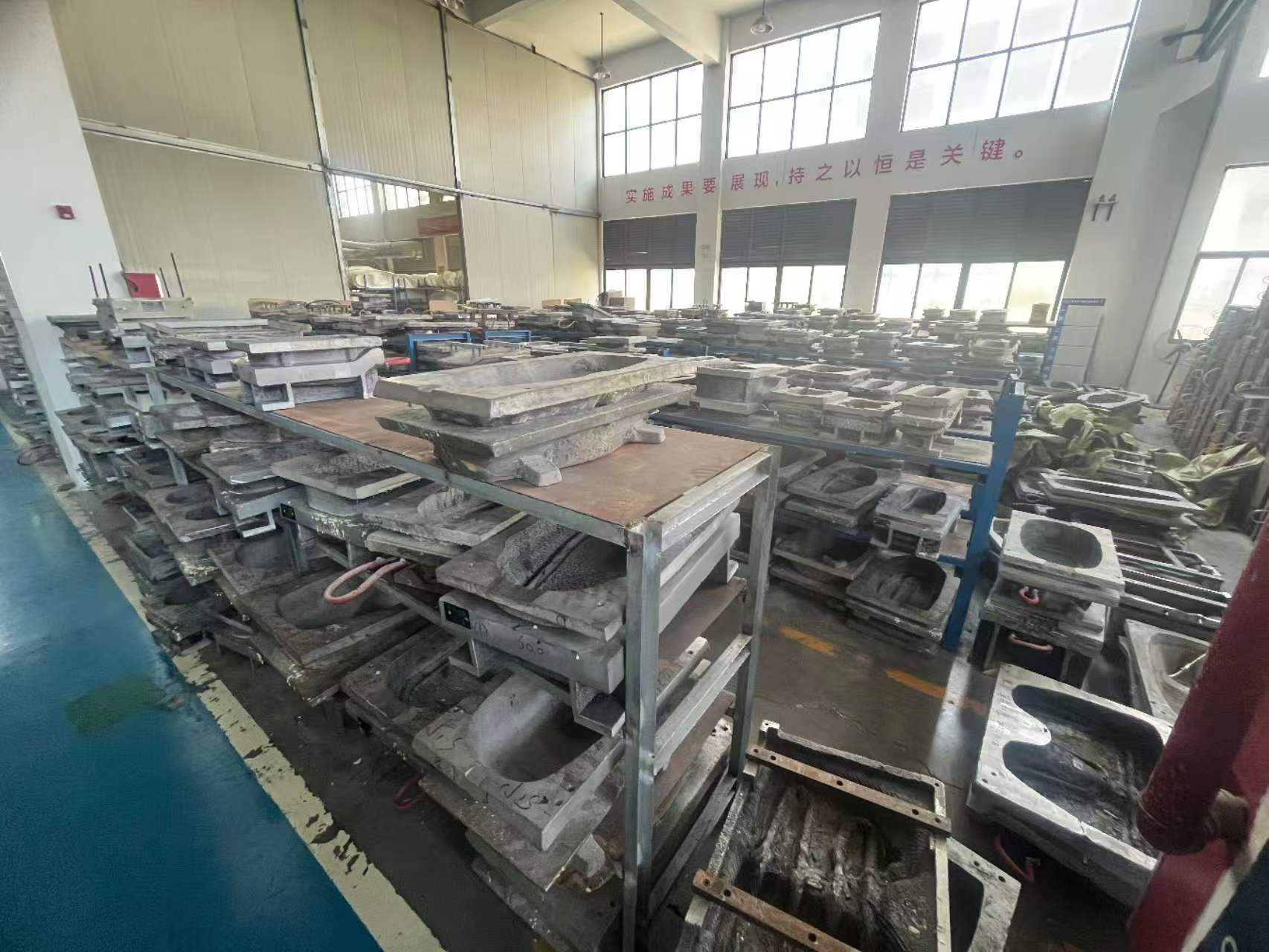
Motorcycle seat cushion production at Staron’s 15,000 m² plant in Taizhou City, Zhejiang Province, China.
The Replacement Solution: What a Project-Ready Motorcycle Seat Is Built From
A replacement seat that holds up in workshop conditions is defined by four build elements: a PVC leather cover, 80D high-density foam, a waterproof construction, and a high-strength floor structure beneath the foam.
PVC Leather Cover
PVC leather is the material the mid-range replacement market has settled on, and for a repair shop it solves three problems at once: the surface wipes clean, it resists the abrasion that tears fabric covers, and it keeps water away from the foam underneath. The material trend supports the direction — synthetic covers are increasingly used for waterproof and soft surface features in the mid-range segment (Fortune Business Insights). Cover finishes are selectable rather than fixed; leather-look textures and rough surface motorcycle seat finishes are options that should be specified per order, because retailers often stock two appearance grades to serve different customer groups.
80D High-Density Foam
80D high-density foam is the cushion layer that determines how a seat feels in the second hour of a ride. Foam hardness and density can be customised per project, which matters because a commuter scooter rider and a highway rider want different support levels from the same seat geometry. The measurable claim behind this specification is recorded in a manufacturer comparison: Zhejiang Xingrong documents 30% stronger foam support and a service life extended by 50% when its replacement seats are compared against original-style Honda and Yamaha seats. That figure is the manufacturer’s own recorded comparison and should be read as a comparison basis rather than an independent test result.
Waterproof Construction and High-Strength Floor Structure
The seat is waterproof and built on a high-strength floor structure. For the buyer, these two properties translate into fewer returns: water that does not reach the foam means no weight gain, no sagging and no odour after a wet season, while a rigid floor structure keeps the seat’s shape and mounting position stable under load. Water leakage and damage risks are managed through systematic controls, and packaging safety has been improved specifically to reduce transit damage — the failure mode that generates most retailer disputes after delivery.
OEM/ODM Support, Warranty and Long-Term Project Backing
Replacement programmes for shops and retailers usually need some level of customisation: a different cover finish, a specific foam hardness, or a private-label build. Xingrong provides OEM and ODM services for these projects and supports them with a 1-year warranty. Project evidence includes a 5,000-piece seat programme for the Lebanon market and supply to 11 countries.
Capacity is what makes repeat supply credible. Xingrong produces 1.8 million seat cushions per year across a 15,000 m² plant in Taizhou City, with 130 employees, 5 R&D engineers, and a self-production rate of 90% for product accessories. The company operates an ISO9000 quality management system and holds CQC certification.
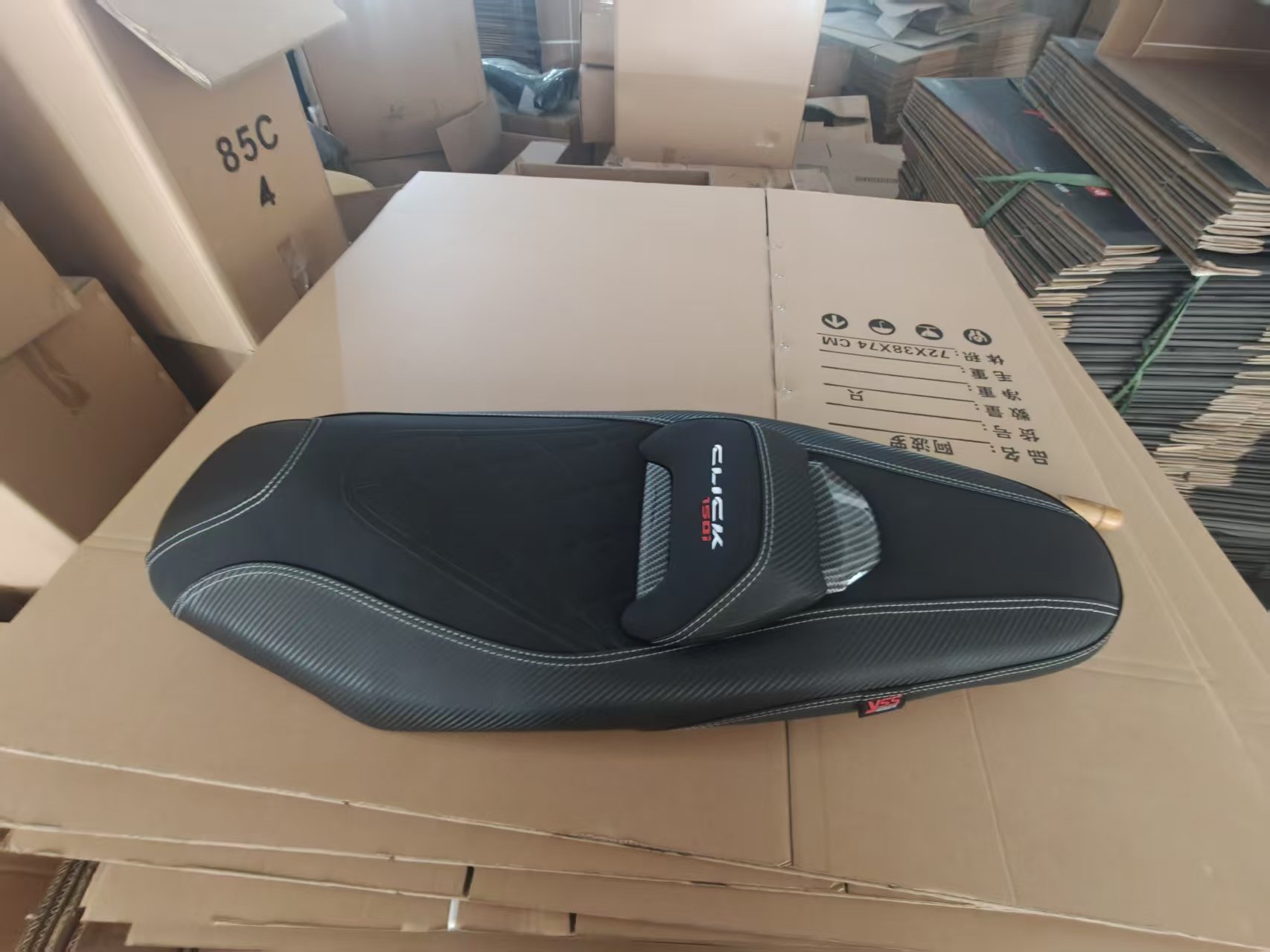
A replacement scooter seat configuration for the Click 150, one of the models covered by the replacement programme.
Step-by-Step: Running a Seat Replacement Project
The sequence below is the working order that keeps a replacement programme from turning into a returns problem. It applies to a single repair shop and to a distributor buying for several retail points.
- Build the model list before you build the order. List every machine the shop or shelf actually services. In this product range that list typically includes Nmax, Xmax, Aerox, ADV150, ADV160, Forza, PCX and Click, plus local best-sellers. Coverage is decided here, not at the quotation stage.
- Separate scooter and dirt bike configurations. Scooter seats are shaped for seated comfort and two-up riding over longer distances; dirt bike and off-road seats are shaped for rider movement and need a different foam and cover approach. Xingrong produces motorcycle, electric vehicle and off-road vehicle seat cushions, so both configurations can come from one programme, but they should be ordered as separate specifications.
- Fix the material and feel specification in writing. Confirm four items per model: PVC leather cover, 80D high-density foam, waterproof construction, and high-strength floor structure. Then set the foam hardness and density for the target rider group — commuter, touring or mixed use.
- Validate fitment on a reference unit before scaling. Check mounting points and seat position against the specific model variant, then move to acceptance. Products are accepted through third-party inspection procedures, and acceptance inspection includes a pre-shipment test.
- Agree the commercial terms. MOQ: 50 units. Delivery terms: FOB/EXW. Payment terms: 30% T/T in advance, 70% T/T against copy of B/L. These terms suit retailers running repeat orders rather than one-off sourcing.
- Plan packaging, spare parts and warranty. Improved packaging safety reduces transit damage; contingency plans include the supply of replacement spare parts to address damage after delivery; project supply carries a 1-year warranty.
- Set a replenishment rhythm. A seat programme fails if the second order does not match the first. Lock the specification, keep the model list current, and use a supplier whose annual capacity — 1.8 million units in this case — can absorb seasonal peaks without changing the build.
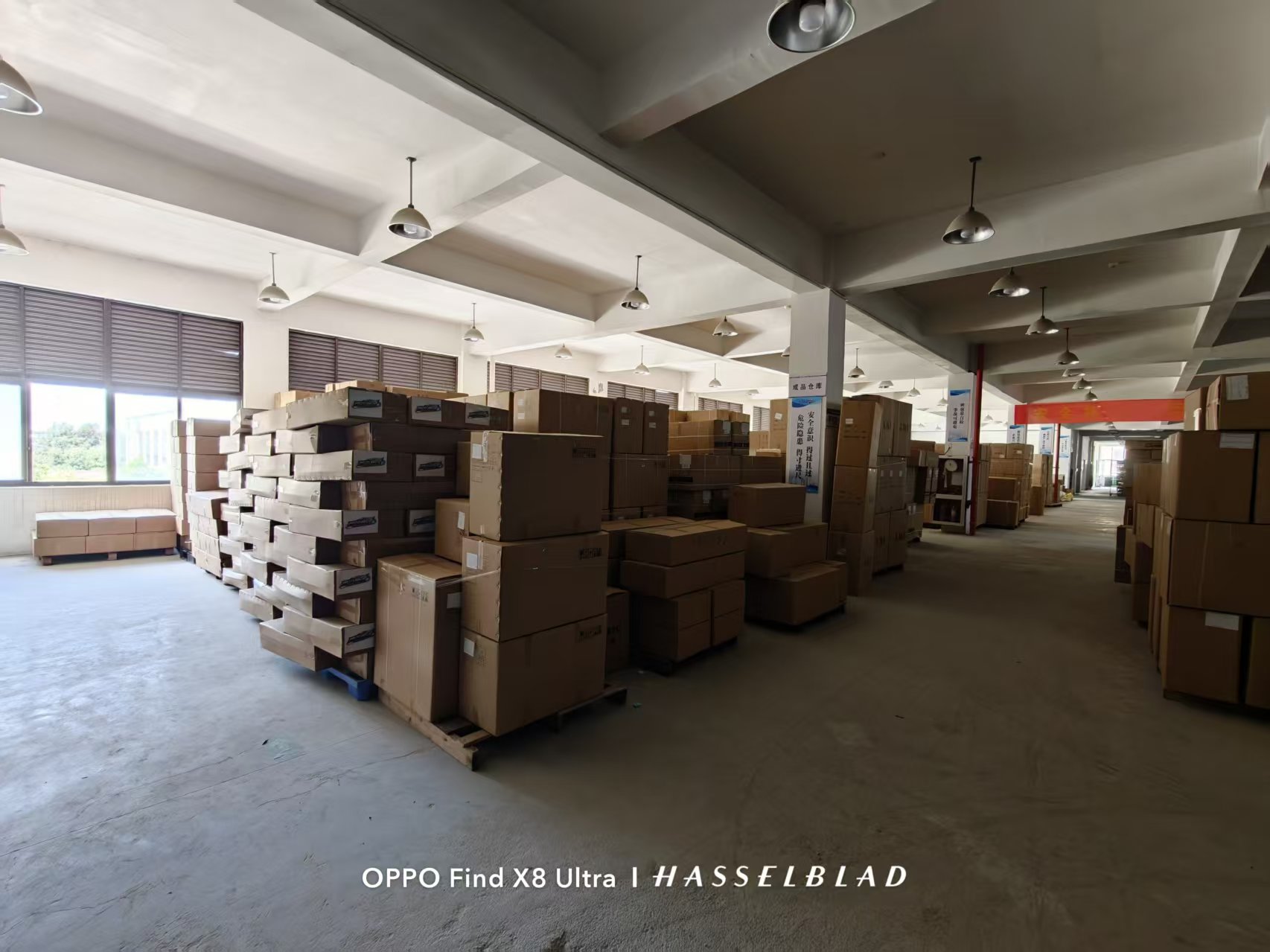
Motorcycle seat cushion manufacturing at Staron, where acceptance inspection includes a pre-shipment test.
Use Cases: Where Replacement Seats Actually Move
- Urban scooter workshop in a wet-season market. Nmax, PCX and Click daily riders return for seat replacement most often after heavy rain. Waterproofing is the first specification to confirm, because a leak claim costs more than the margin on the seat.
- Multi-model parts retailer. ADV150, ADV160, Forza, Xmax and Aerox on one shelf require a consistent build standard so counter staff can explain the difference between appearance grades rather than guessing.
- Off-road and dirt bike replacement. Off-road vehicle seat cushions serve a different rider need: sustained rider movement. Durability of cover and foam matters more here than long-distance softness.
- Regional distributor bulk project. The 5,000-piece Lebanon programme shows what a project order involves in practice: model matching, third-party inspection, packaging protection, warranty coverage and spare-part supply arranged before shipment.
- Export-focused retailer serving several markets. Supply to 11 countries means packaging safety, documentation and a repeatable specification across orders — not a single shipment negotiated on price alone.
Comparison: OEM/ODM Replacement Seat vs Original-Style Seat
The table summarises the comparison Zhejiang Xingrong records between its OEM/ODM replacement seats and original-style Honda and Yamaha seats. It is a manufacturer comparison, and it should be read that way: the useful information is which criteria change and in which direction, not the direction alone.
| Comparison criterion | OEM/ODM replacement seat (Staron) | Original-style seat (Honda, Yamaha) |
|---|---|---|
| Seating comfort | Superior seating comfort; optimized long-distance riding experience (manufacturer comparison) | Reference baseline |
| Foam hardness and density | Customisable per project | Supplied as standard |
| Appearance | More fashionable, personalised appearance options | Standard original appearance |
| Foam support and service life | 30% stronger foam support; service life extended by 50% (manufacturer comparison) | Reference baseline |
| Comprehensive procurement cost | 10% lower (manufacturer comparison) | Reference baseline |
| Maintenance | Less frequent replacement; no daily maintenance required | Standard replacement cycle |
| Best-suited riding conditions | Outdoor, mountain road, highway and rainy-weather riding | General use |
| Energy consumption | No difference — passive fitting part | No difference — passive fitting part |
Comparison figures are the manufacturer’s recorded comparison against original-style Honda and Yamaha seats. They are presented as a decision aid for buyers, not as an independent laboratory result.
FAQ: Sourcing Questions from Repair Shops and Parts Retailers
What acceptance and inspection steps apply to a replacement motorcycle seat order?
Products are accepted through third-party inspection procedures, and acceptance inspection includes a pre-shipment test. That gives the buyer a documented checkpoint before goods leave the factory, which matters when a retailer is stocking several models at once. Where a market requires formal seat approval, the framework to check against is UN Regulation No. 17 (ECE R17), which establishes uniform provisions for the approval of vehicle seats, anchorages and head restraints.
Can one supplier cover Nmax, Xmax, Aerox, ADV150, ADV160, Forza, PCX and Click replacement seats in a single programme?
Yes. Zhejiang Xingrong manufactures motorcycle, electric vehicle and off-road vehicle seat cushions and supports model-matched replacement supply across that scooter range, with OEM and ODM services for custom cover, foam and branding requirements. Reference projects include a 5,000-piece programme for the Lebanon market and supply to 11 countries. Production capacity is 1.8 million seat cushions per year, the accessory self-production rate is 90%, and the company employs 5 R&D engineers.
What are the purchasing terms and acceptance criteria for a bulk seat order?
MOQ: 50 units. Delivery terms: FOB/EXW. Acceptance criteria: pre-shipment test and third-party inspection. Payment terms: 30% T/T in advance, 70% T/T against copy of B/L. Against original-style seats, the recorded comparison also places comprehensive procurement cost 10% lower, which is the figure retailers usually test first when they model a repeat order.
How are water leakage and damage handled after delivery?
Potential water leakage and damage risks are managed through systematic controls. Packaging safety has been improved to reduce transit damage, and contingency plans include the supply of replacement spare parts to address damage after delivery. Project supply is backed by a 1-year warranty, so a repair shop or retailer is not left carrying the cost of a defective unit alone.
How do I evaluate a long-term OEM motorcycle seat manufacturer in China?
Judge repeatability, not the price of the first order. The checks that matter are annual capacity (1.8 million seat cushions per year), self-production rate (90% of accessories made in-house), engineering resource (5 R&D engineers), plant scale (15,000 m² with 130 employees), quality system (ISO9000 and CQC certification), model coverage across Nmax, Xmax, Aerox, ADV150, ADV160, Forza, PCX and Click, and whether the supplier commits to spare-part supply and warranty support after delivery. You can review the full seat cushion catalogue, including model coverage and construction details, before starting that comparison.
Conclusion: Build the Programme, Not the Single Order
Replacement seats are a repeat business for repair shops and parts retailers, and they behave like one. Demand is structural — the aftermarket channel accounts for roughly 62.3% of motorcycle seat revenue — while the difference between a profitable programme and a returns problem comes down to four decisions: confirm fit model by model, specify the build (PVC leather, 80D high-density foam, waterproof construction, high-strength floor structure), agree inspection and commercial terms before the first shipment, and choose a supplier whose capacity, spare-part support and warranty can carry the programme into the next season.
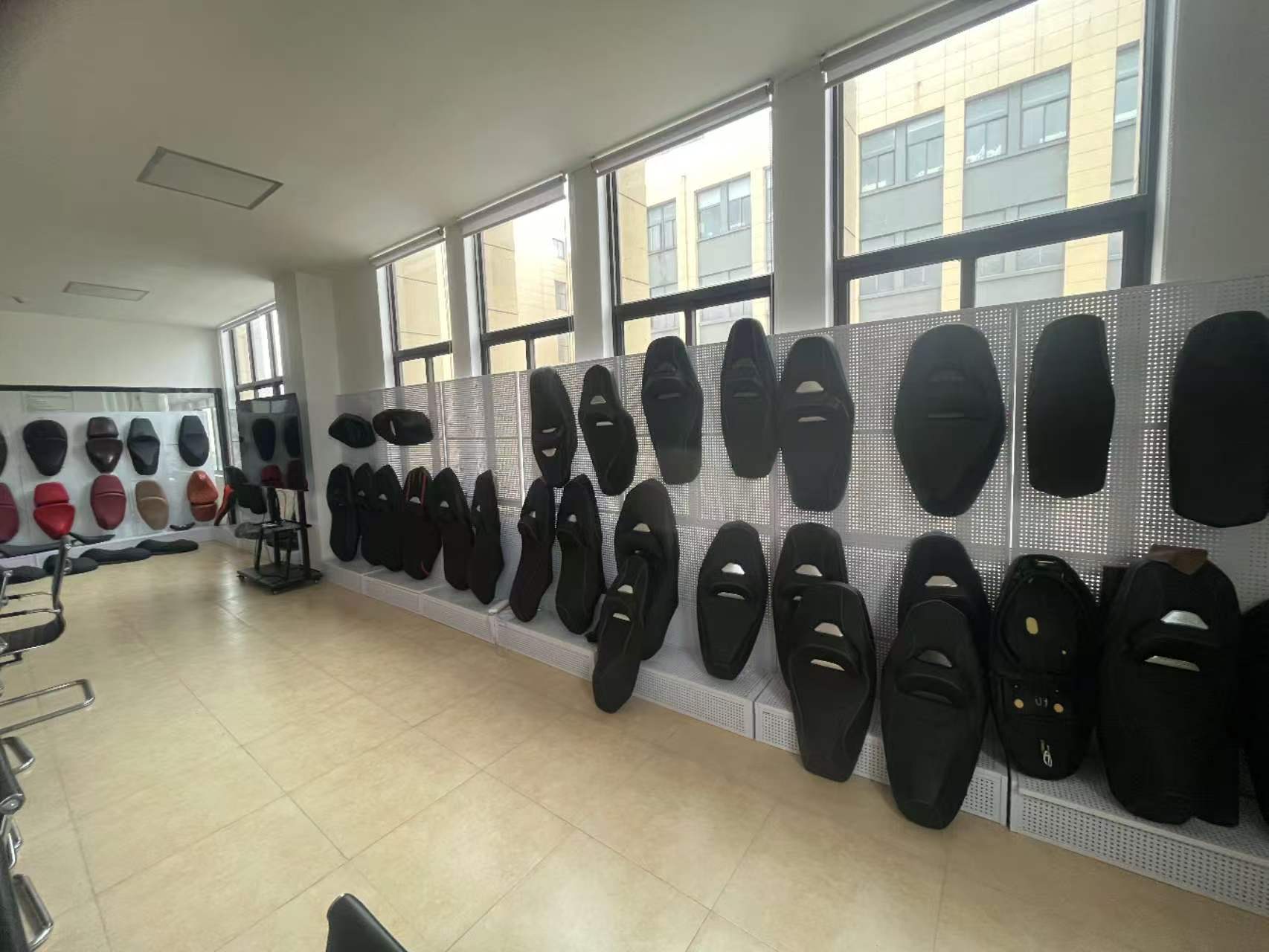
Staron, Taizhou City, Zhejiang Province, China — project supply for repair shops, parts retailers and distributors.
Next Step: Model-Matched Sample and Quotation Support
Send your model list — Nmax, Xmax, Aerox, ADV150, ADV160, Forza, PCX, Click or other models in your market — and request a model-matched recommendation, project quotation or the full seat cushion catalogue.
Contact: Mike | Tel / WhatsApp: +86 13738695125 | Email: mike@zjstaron.com
Catalogue download: STARON Seat Cushion Catalog (PDF)
Manufacturer: Zhejiang Xingrong Auto & Motorcycle Parts Co., Ltd.
Have Questions or Need More Details?
Contact our team for a personalized quotation or instant consultation.
Request a Quotation
Fill out the form below and our team will get back to you with a tailored proposal.
WhatsApp Direct Chat
Prefer to chat in real-time? Message us on WhatsApp for instant assistance & quick answers.
- Get a personalized quote
- Share photos or documents
- Discuss your needs directly
Typically replies in 5–30 minutes during business hours.