
Motorcycle Seat Compliance Essentials: ISO9000 and CQC Standards in Manufacturing
A motorcycle seat sourcing project is only as reliable as the compliance record behind the factory that produces it. During the research and evaluation stage, two certifications do most of the early filtering work: ISO9000 quality management system certification and CQC certification. Zhejiang Xingrong Auto & Motorcycle Parts Co., Ltd. is a manufacturer of motorcycle, electric vehicle, and off-road vehicle seat cushions based in Taizhou City, Zhejiang Province, China. The company holds both certifications, operates OEM and ODM seat production from a 15,000 m² plant, and reports an annual seat cushion production capacity of 1.8 million units, with 90% of product accessories produced in-house.
Export business accounts for 20% of total sales, with markets in Southeast Asia, Europe, the Middle East, and South America. This guide is written for importers, distributors, brand owners, and procurement managers who need to convert a certificate into a sourcing decision. It explains what ISO9000 and CQC actually cover inside a seat factory, where their limits sit, and how certification connects to the OEM, ODM, and wholesale production capability that buyers are really evaluating.
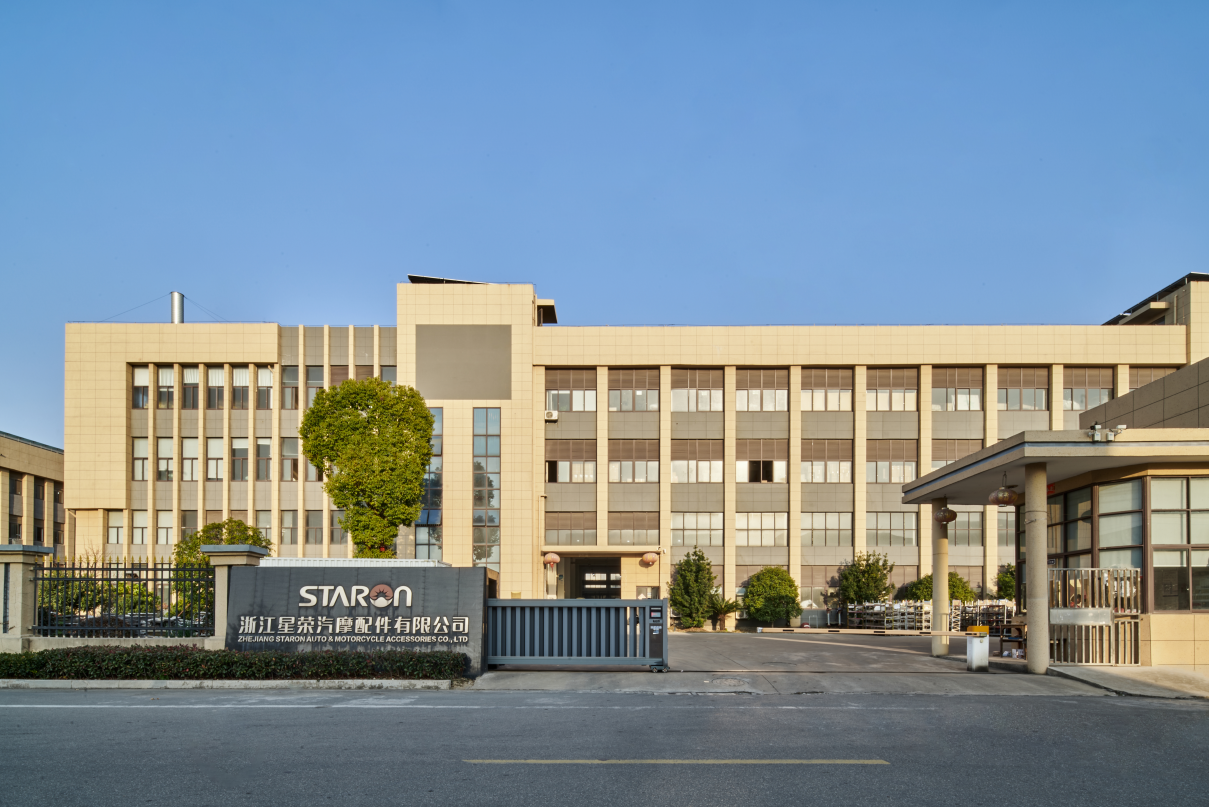
Zhejiang Xingrong seat cushion production facility, Taizhou City, Zhejiang Province, China.
Why Compliance Is the First Filter in Motorcycle Seat Sourcing
A motorcycle seat is a non-powered static fitting part. It is mounted on the motorcycle main body frame and the motorcycle body shell, and once installed it is expected to provide a comfortable riding and sitting experience, beautify the motorcycle appearance, and serve as a direct replacement for a worn original seat. None of those outcomes can be confirmed from a quotation sheet, a product photograph, or thirty seconds of handling a sample.
The evidence gap has three layers, and each one pushes a buyer toward certification documents as the first, cheapest filter.
- Material and process consistency. Whether a seat still feels comfortable after a wet season, whether the cover resists abrasion, and whether the cushion keeps its shape depend on materials and process discipline. A PVC leather cover, an 80D high density foam cushion, PU foam, and a PP plate base are only meaningful if the factory holds to them batch after batch.
- The cost of verification. Testing every candidate supplier in every target market is expensive and slow. Buyers need a screening tool that can be applied before a single sample is shipped.
- Region-specific requirements. A seat sold into Southeast Asia does not necessarily need the same documentation as one sold into Europe. The real question is not whether a supplier is certified, but which certification answers the question the destination market is asking.
The most common mistake: treating ISO9000, CQC, and vehicle safety regulation as interchangeable. They are not. ISO9000 is a management system certification that describes how a factory controls its processes. CQC is a product conformity certification relevant to the Chinese market. Neither is the same thing as vehicle-level seat approval in the European framework, where UN Regulation No. 17 (ECE R17) establishes uniform provisions for the approval of vehicle seats, anchorages, and head restraints, as published by the United Nations Economic Commission for Europe. Buyers whose project falls under vehicle type approval should confirm the applicable framework before comparing supplier certificates at all.
The rule that follows is simple and practical: certification qualifies the factory, and sampling qualifies the product. A buyer who applies both, in that order, avoids the two expensive errors in seat sourcing — ordering from an uncertified workshop because the unit price looked lower, and rejecting a capable certified factory because a certificate was asked to prove something it was never designed to prove.
Industry Background: An Aftermarket-Led Market Raises the Compliance Bar
The demand context explains why replacement seat compliance has become a commercial issue rather than an engineering footnote. According to Market Research Future / Dataintelo, the global motorcycle seats market was valued at USD 7.42 billion in 2025 and is projected to reach USD 13.30 billion by 2032, growing at a CAGR of 8.69%. Dataintelo further reports that the aftermarket distribution channel holds the largest share of that market, at approximately 62.3% of revenue, and that Asia-Pacific accounted for a 38.5% revenue share in 2025, driven by high production and sales volumes in China.
Two implications follow for buyers. First, most seats are sold as replacement parts rather than as original equipment, which means the compliance conversation usually happens between a factory and a distributor, not between two vehicle manufacturers. Second, the centre of gravity of production is in Asia, so documentation and auditability travel with the export order rather than being settled locally.
Material selection follows the same logic. Fortune Business Insights reports that leather remains a premium material for motorcycle seats, while synthetic options such as vinyl and foam are increasingly used to deliver waterproof and soft surface features in the mid-range segment. A PVC leather cover over an 80D high density foam cushion sits squarely in that mainstream band — it is the configuration that most replacement and OEM&ODM wholesale seat programs actually use.
The manufacturing base for these seats is concentrated in a relatively small number of specialist factories. Zhejiang Xingrong Auto & Motorcycle Parts Co., Ltd., founded in 2015 and located in Taizhou City, Zhejiang Province, operates a 15,000 m² plant with 130 employees and a five-engineer research and development team. Its range covers scooter seats and dirt bike seats for models including Nmax, Xmax, Aerox, ADV150, ADV160, Forza, PCX, and Click. The company profile describes it as the earliest-established motorcycle saddle factory in Zhejiang Province and reports a 90% self-production rate for product accessories — a figure that matters for compliance, because the more of a seat a factory makes itself, the more of the seat it can actually control.
What ISO9000 and CQC Certification Cover in a Seat Factory
ISO9000 quality management system certification
ISO9000 is a process certification. It confirms that a manufacturer runs a documented quality management system covering how work is planned, how incoming materials are handled, how production steps are controlled, how non-conforming output is managed, and how records are retained. In a seat factory, that system is what allows a buyer to expect that the tenth production run resembles the first. What ISO9000 does not do is certify that any individual seat is waterproof, comfortable, or compatible with a specific motorcycle model.
CQC certification
CQC certification is a product conformity certification. It indicates that a product has been assessed against applicable requirements through a recognized Chinese certification body and may carry the corresponding conformity mark. For a buyer sourcing a customized or ODM motorcycle seat that will also be offered in the Chinese market, or for a brand that wants a third-party product document alongside the factory's own test reports, the CQC mark adds a layer of conformity evidence that a self-declaration cannot provide.
Two limits worth stating plainly
- Certification is a filter, not a guarantee. ISO9000 and CQC together qualify the supplier. They do not replace sample validation and they do not certify fitment for a specific bike model.
- Certification is scoped, not universal. A certificate covers a defined scope of products and processes. Buyers should confirm that the scope printed on the certificate matches the seat category being ordered — scooter seats, dirt bike seats, or customized covers — rather than accepting a scanned PDF at face value.
How Certification Supports Reliable OEM and ODM Seat Production
Compliance becomes commercially useful only when it shows up in production behaviour. Zhejiang Xingrong's certified production system supports three engagement models that cover most buyer situations: OEM manufacturing, in which seats are produced to a buyer's specification and branding; ODM manufacturing, in which a ready-developed seat design is supplied for the buyer to rebrand; and wholesale supply of standard replacement seats. Across those models the company offers customization of the logo brand, the leather cover design, and the stitching line colour — the three variables that decide whether a seat reads as a generic replacement part or as a branded accessory.
For planning purposes, the operating parameters are as follows.
- Production modes: OEM and ODM motorcycle seat manufacturing
- Customization scope: logo brand, leather cover design, stitching line colour
- Monthly capacity: 50,000 pcs
- Minimum order quantity: 50 pcs
- Production lead time: 25–35 days
- Quality control: 100% pre-shipment test
- After-sales: 1-year warranty
- Export share of total sales: 20%
- Export markets: Southeast Asia, Europe, the Middle East, South America
Two of these figures deserve a second look. A 50-piece minimum order quantity is low enough for a distributor to validate a new model line before committing capital, while a 50,000 pcs monthly capacity means the same factory can absorb a scale-up order without a change of supplier. The 25–35 day window is production lead time, not ocean transit, so buyers planning a retail calendar should add shipping on top.
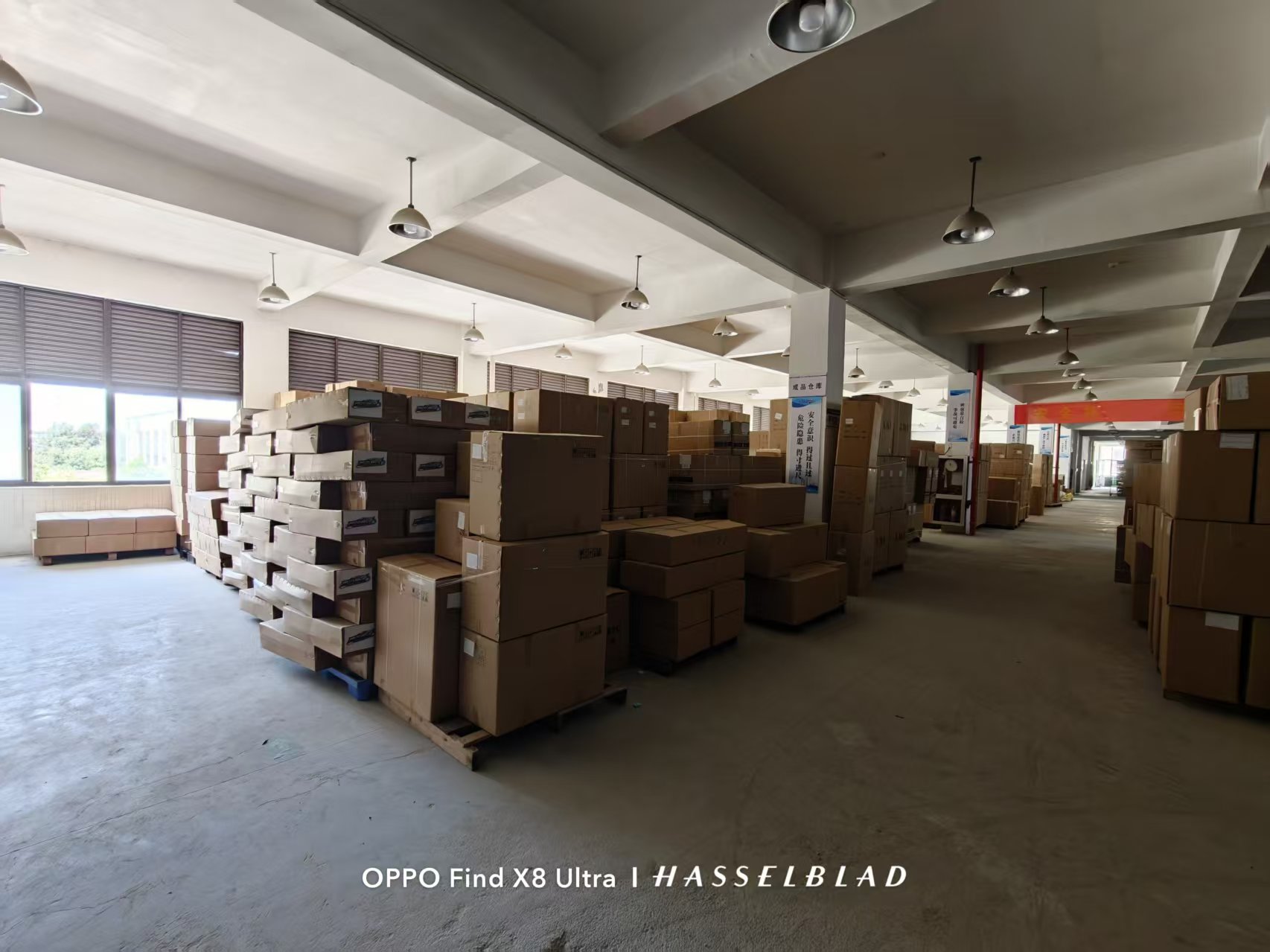
OEM and ODM motorcycle seat production at the Zhejiang Xingrong plant.
Where material specification meets compliance discipline
Material specification is where seat comfort and longevity are decided, and it is also where certification discipline becomes visible. Zhejiang Xingrong's motorcycle seats use a PVC leather cover, a cushion made of 80D high density foam, and PU foam and PP plate components, with what the company describes as a high-strength floor structure. In practice, each element carries a different part of the buyer's risk:
- The 80D high density foam cushion carries the load and determines whether the seat still behaves like a comfortable motorcycle seat after months of daily riding.
- The PVC leather cover provides the water-resistant, easy-clean surface that a waterproof motorcycle seat needs in wet-season markets.
- The PP plate base anchors the seat to the frame and turns the product into a structural fitting rather than a soft accessory.
These specifications are only meaningful if they are held constant across orders, which is exactly the function a certified quality management system is meant to perform. The same discipline underpins the company's longer-term relationships with several domestic first-line general machinery factories, where repeat production tolerances are non-negotiable.
Step-by-Step: Verifying Compliance and Certification Before You Order
Buyers who want a repeatable qualification process can run the following seven steps in order. Each step produces a document or a decision, which makes the process auditable when a project is handed to a colleague or transferred to a new market.
Step 1 — Define the application scenario first. Establish whether the seat is for aftermarket parts replacement, for a new model, or for a stock improvement; whether the working condition is waterproof; and which climate the end market represents. This decides which special requirements apply. Weather resistance, a wear-resistant surface, and ergonomic design are typical for exposed commuter and scooter applications.
Step 2 — Request certifications and check the scope. Ask for ISO9000 and CQC documentation and confirm that the certified scope covers seat cushions and the relevant seat categories. A certificate that does not name your product category is not evidence for your project.
Step 3 — Verify production depth and capacity. Self-production rate, plant area, staff count, and monthly output show how much of the seat the factory actually controls. Zhejiang Xingrong reports a 90% self-production rate for accessories, a 15,000 m² plant, an annual capacity of 1.8 million seat cushions, and 50,000 pcs per month available on OEM and ODM programs.
Step 4 — Match the material specification to the application. Confirm cover material, foam density, and base plate in writing. A request for a soft motorcycle seat or a waterproof motorcycle seat should be translated into specific material decisions rather than left as an adjective on a purchase order.
Step 5 — Validate a sample against the special requirements. Test the sample for the conditions identified in Step 1: waterproof performance, weather resistance, surface wear, and ergonomic comfort over a realistic ride duration.
Step 6 — Confirm commercial terms. Minimum order quantity, pricing structure, and production lead time. The standard terms at Xingrong are a 50 pcs MOQ with a 25–35 day production window, which allows a wholesale motorcycle seat program to start small and scale on the same SKU.
Step 7 — Lock quality control and after-sales. Agree the inspection standard before production begins. Pre-shipment testing is the buyer's last control point, and the 1-year warranty defines what happens after it.
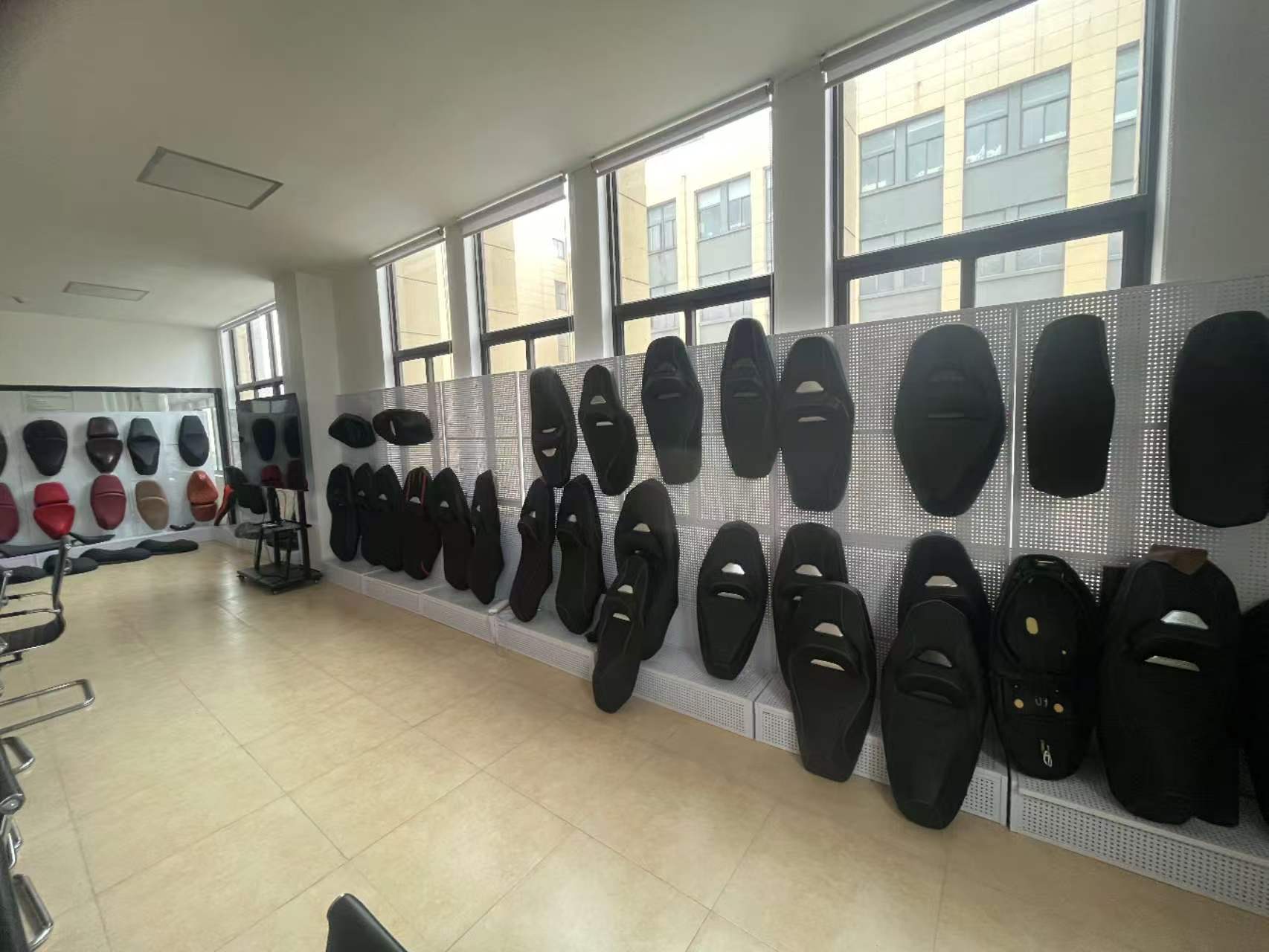
Quality control and pre-shipment inspection of motorcycle seat cushions.
Use Cases: Where Waterproof and Compliance Requirements Converge
The most common scenario for a certified replacement seat is straightforward parts replacement in wet or humid markets. This application scenario is common in multiple countries, including Iran, India, Italy, South Korea, Lebanon, Portugal, Thailand, Taiwan, Turkey, and Vietnam. The seat functions as a direct replacement for an old seat while providing a comfortable riding and sitting experience and improving the motorcycle's appearance. Because the product operates in a non-powered static fitting mode, the entire performance burden falls on materials and fitment: there is no mechanism to compensate for a collapsing foam cushion or a cover that absorbs water.
A documented project illustrates the scale this can reach. A Lebanon-based buyer ordered 5,000 pcs within a two-year working relationship, for motorcycle parts replacement, with reported results covering seating feel, visual effect, repair and replacement capability, and waterproof performance.
The second scenario is the custom modified motorcycle seat. Accessory brands, repair shops, and retailers need a seat that carries their own identity, which is why logo branding, leather cover design, and stitching line colour are offered as customization options. A factory-modified motorcycle seat lets a brand build a distinctive product without owning tooling, and the factory's certification record becomes part of the brand's own compliance story at retail.
The third scenario is wholesale and distribution. A 50-piece MOQ combined with 50,000 pcs of monthly capacity allows an importer to test a market with a small first order, then scale the same model — including Nmax, Xmax, Aerox, ADV150, ADV160, Forza, PCX, and Click applications — without changing supplier mid-season.
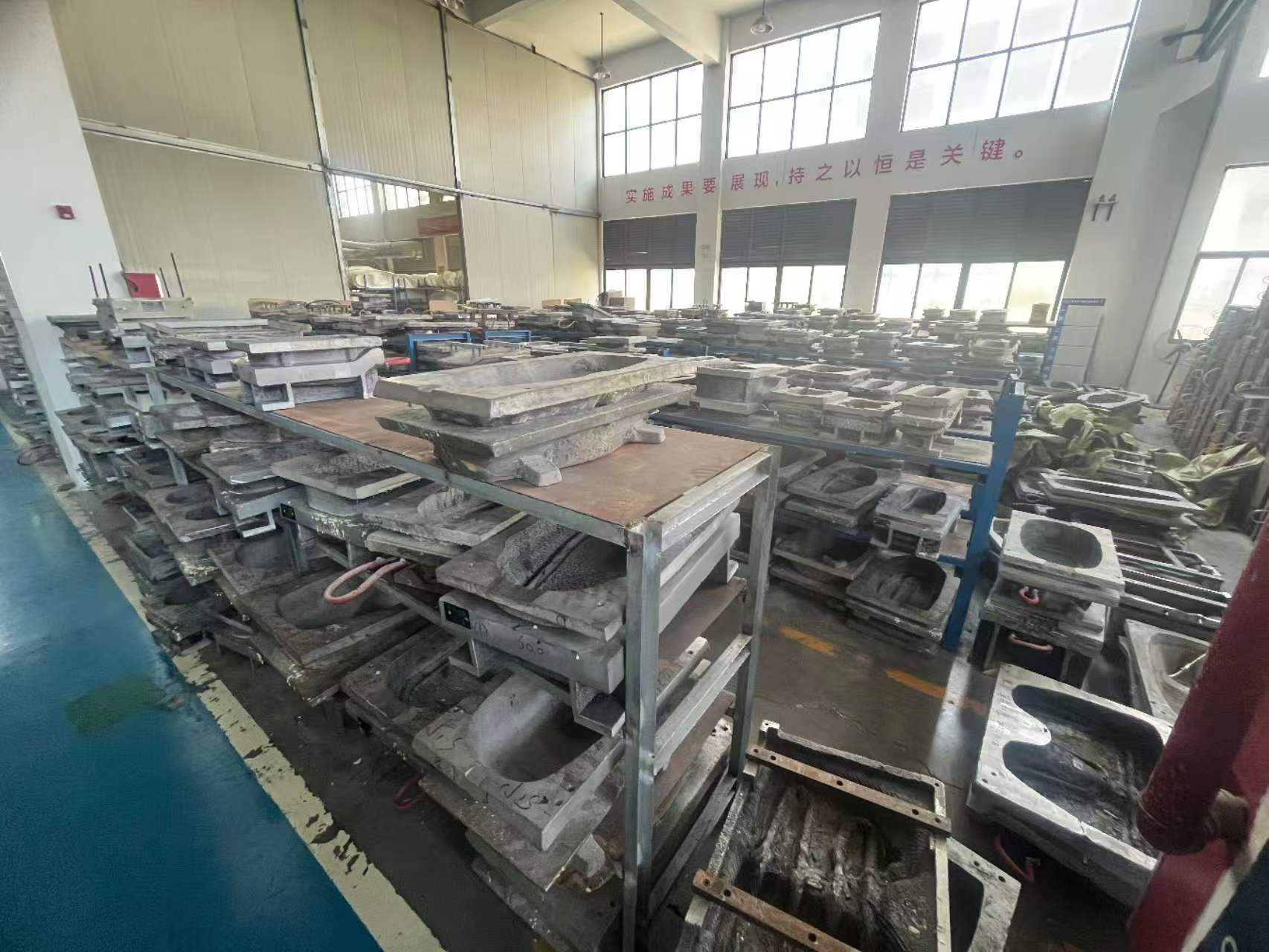
Seat cushion stock and order dispatch supporting export markets.
Comparison Table: What Each Framework Tells a Motorcycle Seat Buyer
| Framework | What it covers | What it tells a buyer | How to use it in a seat project |
|---|---|---|---|
| ISO9000 quality management system | Factory processes: planning, material control, inspection, documentation, records | The supplier can repeat production to a controlled standard | Held by Zhejiang Xingrong; use it to qualify the factory before sampling |
| CQC certification | Product conformity assessment against applicable requirements | Third-party product conformity evidence beyond a supplier self-declaration | Held by Zhejiang Xingrong; adds a conformity document alongside factory test records |
| UN Regulation No. 17 (ECE R17) | Uniform provisions for the approval of vehicle seats, anchorages, and head restraints | Vehicle-level safety framework used in Europe | Confirm whether your project requires type approval; it answers a different question from ISO9000 or CQC |
| Buyer sample validation | Fitment, comfort, waterproofing, surface wear, weather resistance | Performance of the specific part you intend to sell | Run it on every project; it covers what certifications cannot |
Frequently Asked Questions
Which certifications should I verify on a motorcycle seat manufacturer?
Request ISO9000 and CQC documentation first. ISO9000 covers the factory's quality management system — production planning, material control, inspection, and record keeping — while CQC is a product conformity certification. Zhejiang Xingrong Auto & Motorcycle Parts Co., Ltd. holds both. Check that the scope printed on each certificate covers seat cushions and the seat category you are ordering, and treat both as supplier qualification tools rather than as proof of fitment or ride comfort.
How do I choose a motorcycle seat manufacturer for waterproof aftermarket models?
Start with the application rather than the catalogue. Waterproof replacement applications require a water-resistant cover material, weather resistance, a wear-resistant surface, and ergonomic design, and these are the specification points to confirm in writing. Zhejiang Xingrong builds seats with a PVC leather cover, an 80D high density foam cushion, PU foam, and a PP plate base, supplies markets including Thailand, Vietnam, India, Italy, Portugal, Turkey, Lebanon, Iran, South Korea, and Taiwan, and reports waterproof performance as a key outcome of replacement projects. Confirm capacity and order terms next: 50,000 pcs per month and a 50 pcs minimum order let you test a model before scaling.
What is the minimum order quantity for an OEM motorcycle seat program?
A 50 pcs minimum order quantity applies to custom motorcycle seat production at Zhejiang Xingrong, which makes it practical to validate a new model, logo, or cover design before committing to volume. This MOQ sits alongside OEM and ODM production modes and customization of logo branding, leather cover design, and stitching line colour. It is also the reason a distributor can run a limited wholesale motorcycle seat launch without holding excess inventory.
How can I validate seat quality before mass production?
Request a sample and test it against the requirements you defined for the project: waterproof behaviour, weather resistance, surface wear, and ergonomic comfort over a realistic ride duration. Certification cannot confirm those on a specific part; sample validation can. Once a sample is approved, production quality is protected on the factory side, including 100% pre-shipment testing for orders produced by Zhejiang Xingrong.
What lead time and after-sales terms should a buyer expect?
Plan for a 25–35 day production lead time and then add international transit to your destination. After-sales coverage for Zhejiang Xingrong seats is a 1-year warranty, with quality control handled through 100% pre-shipment testing. Export markets served include Southeast Asia, Europe, the Middle East, and South America, and export business represents 20% of total sales. If you would like to review the range before starting a project, the Staron seat cushion catalogue is available for download, and a sample or quotation request can be sent to mike@zjstaron.com or through WhatsApp at +86 13738695125.
Conclusion: Certification Is the Starting Point of a Seat Project, Not the Finish Line
ISO9000 and CQC certification give buyers a fast, low-cost way to separate a production-capable motorcycle seat manufacturer from a trading intermediary. ISO9000 answers the process question — can this supplier control its manufacturing, hold material specifications constant, and document what it did? CQC answers the product conformity question. Neither answers the fitment, comfort, or waterproofing question for a specific part, and both should be checked for scope rather than merely collected.
For importers, distributors, brand owners, and procurement managers, the sequence stays the same: verify certification and its scope, confirm the production depth behind it, match materials and a sample to the application, then agree MOQ, lead time, quality control, and after-sales in writing. Zhejiang Xingrong Auto & Motorcycle Parts Co., Ltd. operates a 15,000 m² plant in Taizhou City with an annual seat cushion capacity of 1.8 million units, a 90% accessory self-production rate, ISO9000 and CQC certification, and OEM and ODM production covering scooter seats and dirt bike seats — a factory profile built to satisfy the first half of that sequence. The second half is settled on the bench, with your sample, in your market conditions.
Next Step
Review the full motorcycle seat range in the Staron seat cushion catalogue, then request a sample or a quotation for your model, volume, and cover specification.
Email: mike@zjstaron.com | WhatsApp: +86 13738695125 | Website: www.zjstaron.com
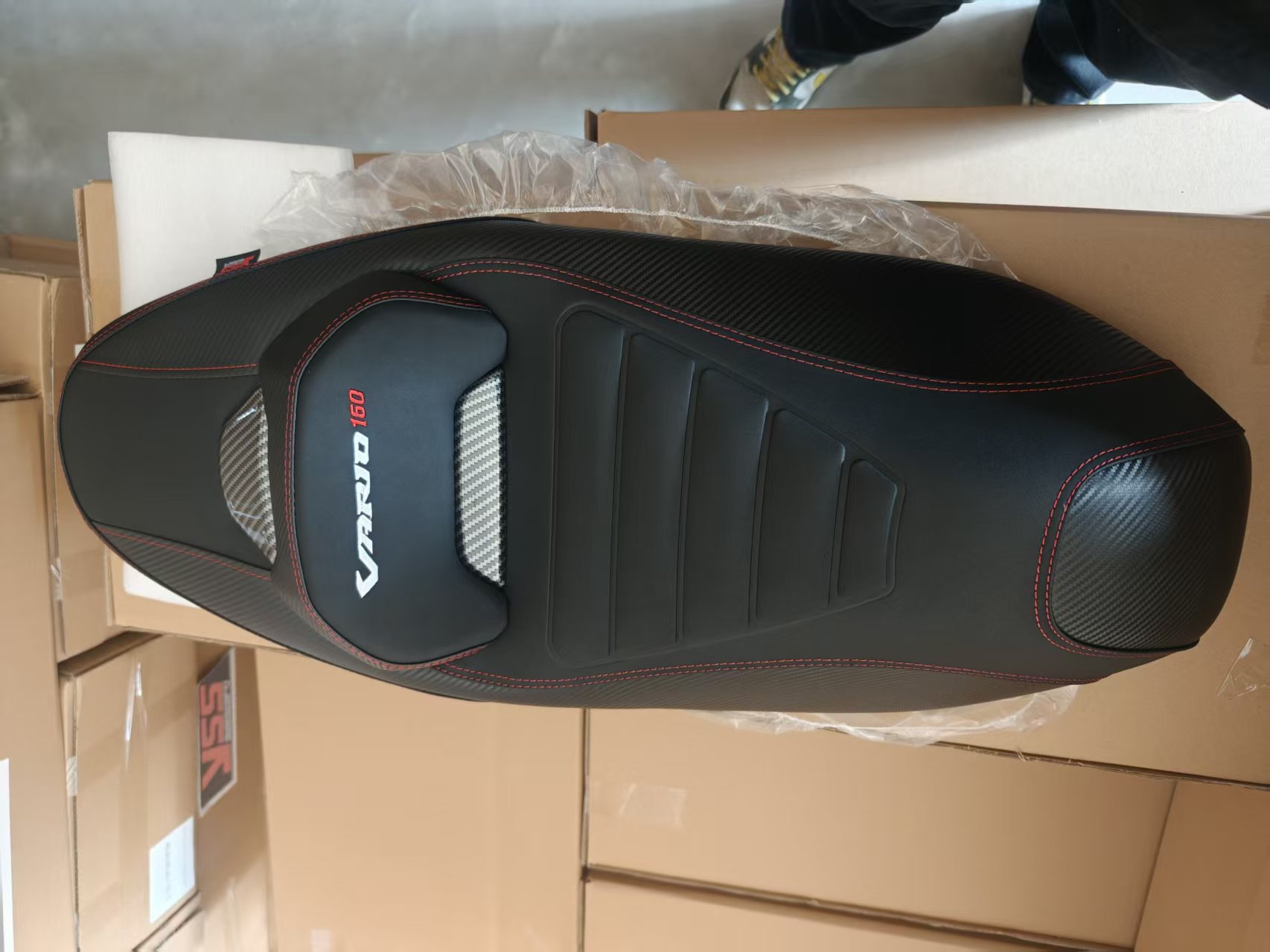
Motorcycle seat produced for OEM, ODM, and wholesale replacement programs.
Have Questions or Need More Details?
Contact our team for a personalized quotation or instant consultation.
Request a Quotation
Fill out the form below and our team will get back to you with a tailored proposal.
WhatsApp Direct Chat
Prefer to chat in real-time? Message us on WhatsApp for instant assistance & quick answers.
- Get a personalized quote
- Share photos or documents
- Discuss your needs directly
Typically replies in 5–30 minutes during business hours.