
Motorcycle Seat Compliance: ISO9000, CQC and Export Checks
A motorcycle seat export order is rarely stopped by the seat. It is stopped by paperwork that does not match the product in the carton: a quality-management certificate quoted for a factory but never read for scope, a fitment list that covers eight scooter models while the shipment contains something else, or a buyer who treated a supplier certificate as proof of destination-market approval.
This guide separates those questions. It examines the two credentials Zhejiang Xingrong Auto & Motorcycle Parts Co., Ltd. states it holds — ISO9000 quality management system certification and CQC certification — and then walks through the checks that sit around them: product specification, model fitment, pre-shipment testing, warranty terms, customs classification and destination confirmation for Southeast Asia, Europe, the Middle East and South America.
The distinction the article keeps returning to is simple. A supplier certificate answers a question about the supplier's management system. It does not answer a question about what a destination country requires of the product. Both questions have to be closed before an export order is safe, and they are closed with different documents, by different people, at different points in the process.
What a compliant motorcycle seat actually has to prove
Buyers moving from research into evaluation usually ask one question — is this seat factory certified? — and accept one answer. The answer is not wrong. It is incomplete, because the word compliant is doing two jobs at once. One job belongs to the factory. The other belongs to the product and to the border it crosses.
Layer one: the supplier's management system
ISO9000 is a family of quality-management standards rather than a single document, and a certificate is issued against one standard in that family, for a defined scope, at a defined site. That is why the certificate itself matters more than the phrase ISO9000 certified. Read properly, a quality-management certificate tells a buyer that the supplier operates a documented system: how specifications are controlled, how non-conforming production is identified and handled, how records are retained, and how corrective action is triggered when something goes wrong. For a buyer placing a 5,000-piece replacement program, that is a meaningful signal about consistency between the first carton and the two-hundredth.
Layer two: the product at the destination border
What the certificate does not tell you is whether a specific seat satisfies the requirements of a specific destination market. That is a product-level question. It is decided by the importing country's rules for the product category, by how the item is classified for customs, and often by what the importer is obliged to declare or hold on file. The material available for this guide does not establish seat-specific regulatory requirements for any of the destinations discussed below, and the article therefore does not state any. What it does instead is define the questions to close, in the order that closes them most cheaply.
The practical consequence is blunt. A buyer who checks only the certificate has verified the easier half of the problem, and has verified it at the point where it is least useful — after the purchase order has already been issued.
Why compliance questions arrive late in seat sourcing
A motorcycle seat is a non-powered static fitting part. It mounts to the motorcycle frame and body shell, it provides the riding surface, it shapes the appearance of the machine, and in the replacement market it restores a worn, cracked or flattened original. Because it carries no electronics and no power supply, buyers often treat it as a simple item and negotiate it as one — model, quantity, price — and only then ask for certification, days before the shipment is booked.
That sequence is where most of the friction appears. The supplier's file may be complete and still not answer the buyer's question, because the question usually arrives as send me your certificates rather than does this certificate cover this product, at this site, for this destination. The cost of discovering the gap after production is not the certificate itself. It is the delay, the re-inspection, and occasionally the reclassification of a shipment that was described inaccurately on the commercial invoice.
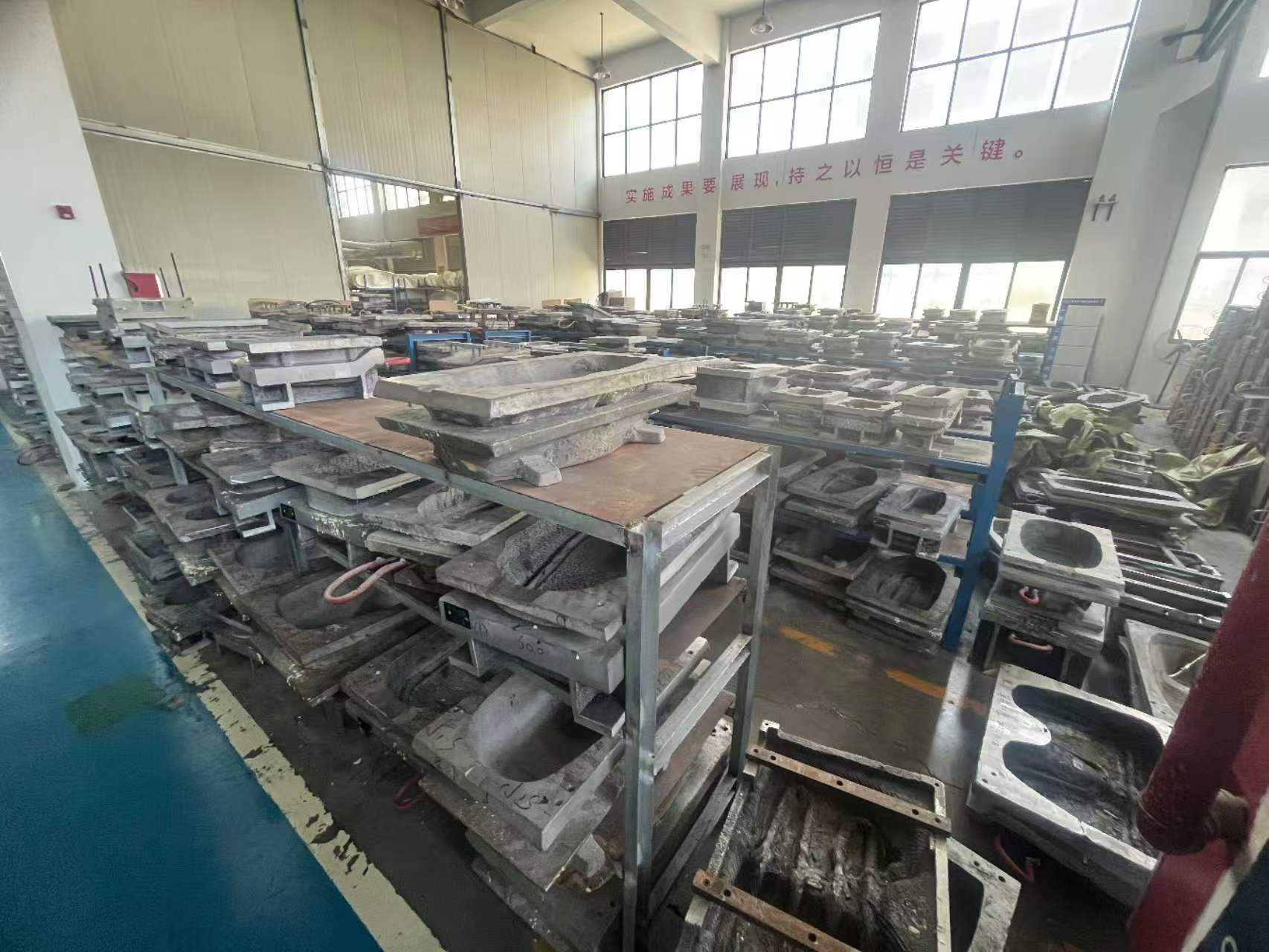
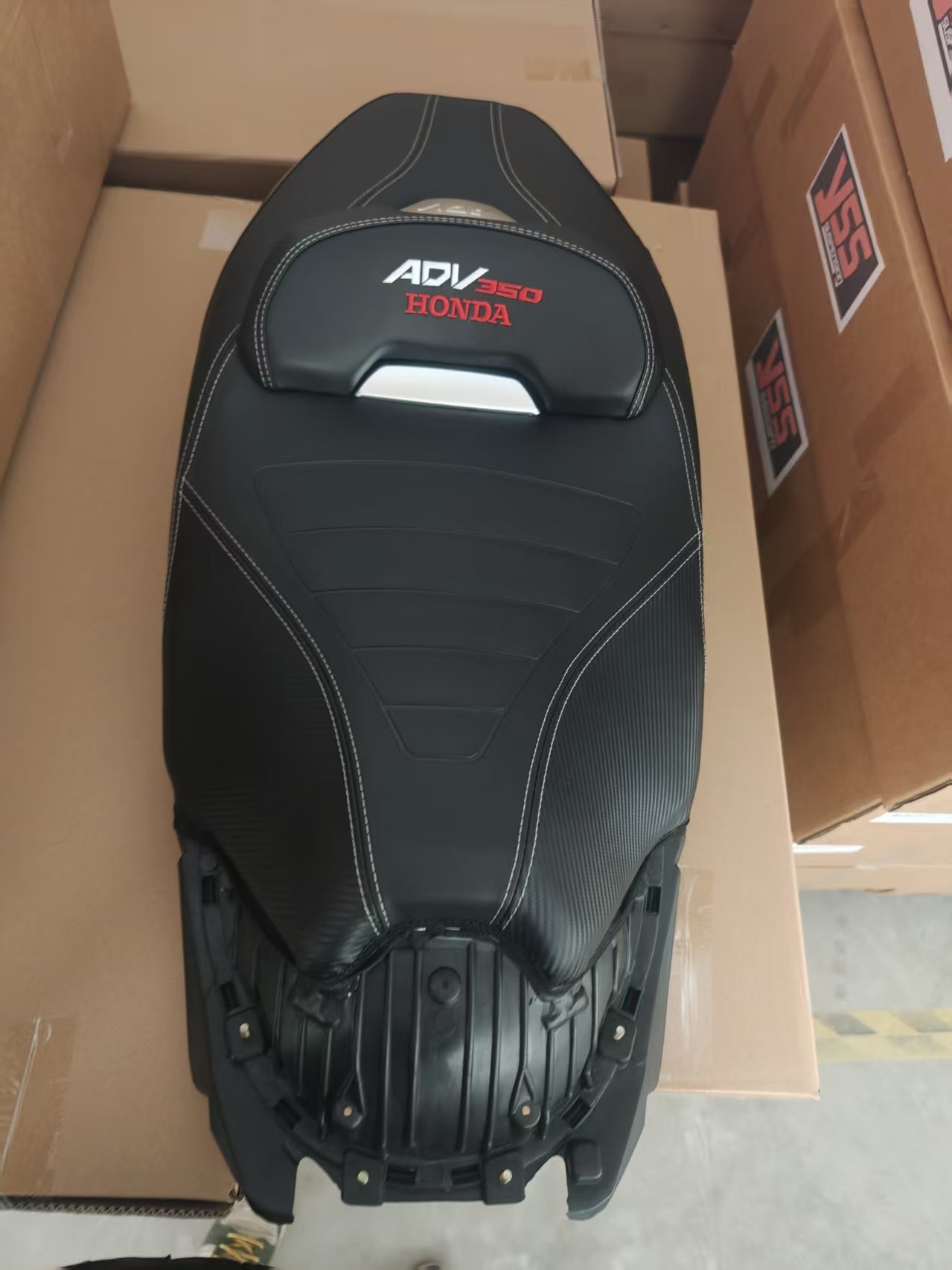
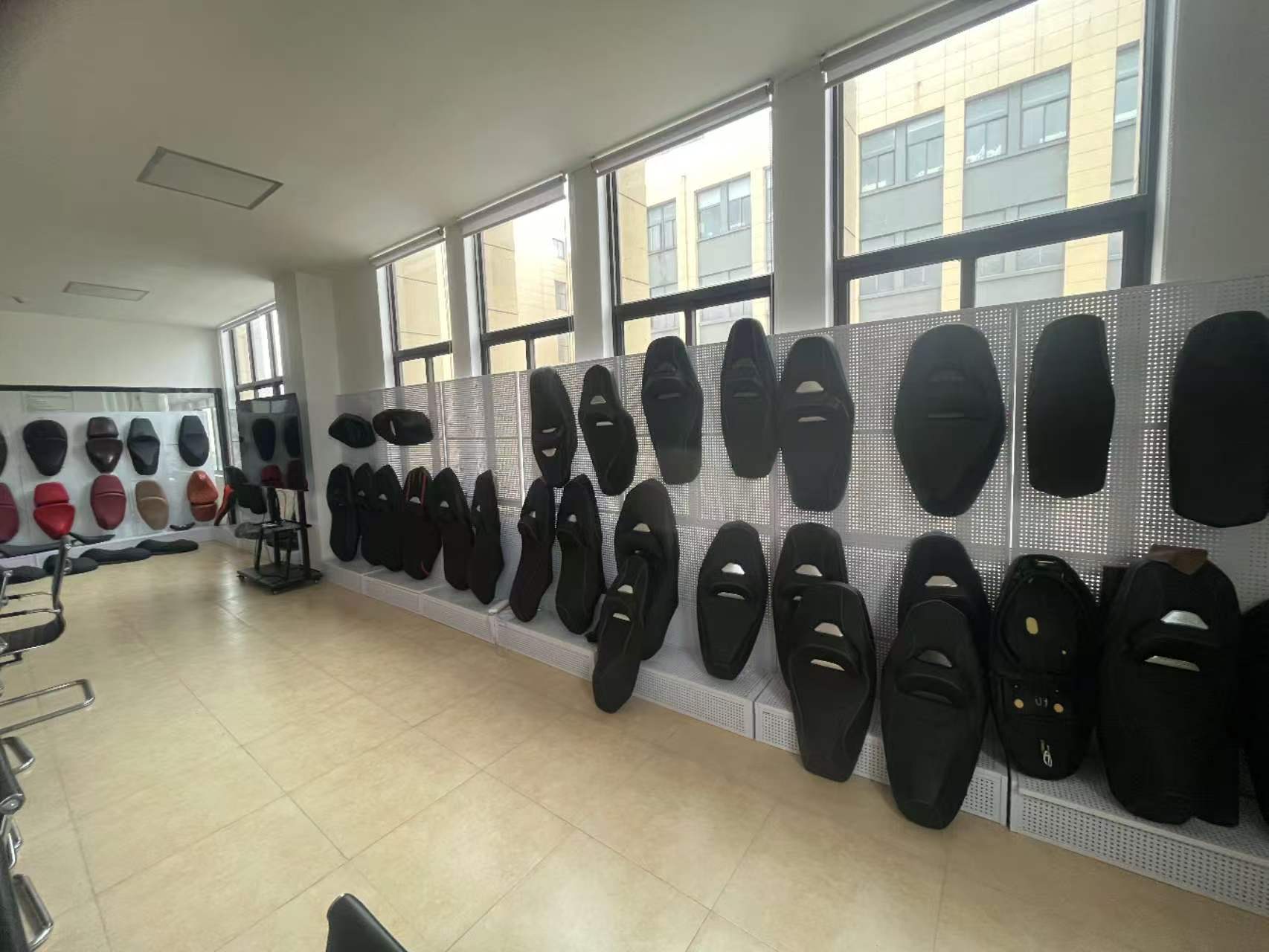
The supplier used as the reference case here shows how the pieces fit together. Zhejiang Xingrong Auto & Motorcycle Parts Co., Ltd. is a Taizhou-based manufacturer of motorcycle, electric-vehicle and off-road-vehicle seat cushions, founded in 2015, operating a 15,000 m² plant with 130 employees, a five-engineer R&D team and a stated annual capacity of 1.8 million seat cushions. Its product record covers scooter seats and dirt bike seats built on a PP base plate with PU foam and PVC leather, an 80D high-density foam layer and a high-strength floor structure, for models including Nmax, Xmax, Aerox, ADV150, ADV160, Forza, PCX and Click. According to its own company profile, it has passed ISO9000 quality management system certification and CQC certification, reports a 90% self-production rate for product accessories, and states an export ratio of 20% across Southeast Asia, Europe, the Middle East and South America.
None of those figures answers a market-access question by itself. Together they do tell a buyer what kind of supplier is being evaluated: a component-integrated seat maker rather than an assembler, with a documented quality system and a defined model range. The rest of this guide is about converting that profile into a checkable file.
What the ISO9000 and CQC certificates cover, and what they do not
Both credentials belong to the same layer — the supplier's system — but they are issued through different routes and should be read separately rather than treated as two badges that add up to a passport. The supplier states that it has passed both. Verification is still the buyer's job, because a certificate is a document with a scope, a date and an address, and each of those can fail to match the order.
Six things to read on any certificate
- The issuing body and its accreditation mark. A certificate without a traceable issuing body cannot be verified independently, and an unverifiable certificate is worth no more than a statement.
- The exact standard referenced. The ISO9000 family contains more than one standard, and only some are intended for third-party certification. Ask which one appears on the certificate.
- The certificate number and validity dates. Confirm the issue date, the expiry date, and whether the certificate is currently within its surveillance cycle.
- The scope statement. This is the line most often skipped and most often decisive. It names the products, processes or product families covered. A scope written for assembly does not automatically cover the foam, cover or base plate.
- The site or sites covered. A certificate issued for one address does not automatically extend to a second workshop or a subcontracted line.
- Consistency with the commercial documents. The legal entity name on the certificate should match the entity on the invoice, the packing list and the business licence.
A CQC certificate should be read the same way, field by field. The scope line matters most for a seat order, because a certificate describing a factory's management system is not, by itself, a statement about a particular model's foam density, cover material, colour fastness or waterproof performance.
Where a 90% self-production rate changes the question
Component integration affects how much of the seat a certificate can reasonably speak for. With a stated 90% self-production rate for product accessories, most of the base plate, foam and cover work happens inside the same system that the certificate describes. That reduces the chance of a critical component being produced somewhere the audit never visited. It does not remove the need to ask. The question simply shifts from which factory made this to does the scope statement name the components as well as the finished assembly.
| Evidence item | What it supports in a seat order | What it does not establish |
|---|---|---|
| ISO9000 quality management system certificate | A documented quality system at a named site, within a stated scope | Product conformity for any destination market; material composition; performance of a specific model |
| CQC certification | An additional certification held by the supplier, subject to its own scope and validity | Automatic acceptance in an importing country; coverage of models outside the stated scope |
| 100% pre-shipment test (stated) | That every unit is checked before dispatch, if the check and its record format are defined | Which characteristics are tested; the pass criteria; test methods for waterproofing or abrasion |
| 1-year warranty (stated) | A stated after-sales period, subject to written terms | What is excluded; who pays return freight; how a claim is evidenced |
| Product specification sheet | PP base plate, PU foam, PVC leather, 80D high-density foam, high-strength floor structure | Test methods or tolerances behind the stated figures unless documented separately |
| Model fitment list | Coverage of Nmax, Xmax, Aerox, ADV150, ADV160, Forza, PCX and Click | Fitment on models outside that list, such as Vespa or other scooter lines, without separate confirmation |
| Customs classification reference | HS 871411 is listed by WITS (UN COMTRADE data) as motorcycle saddles; HS 871419 as motorcycle parts not elsewhere specified | The correct code for a particular shipment of a complete seat, a cover or a base plate; that is a classification decision for the shipper and broker |
| Capacity and integration statements | 1.8 million seat cushions stated annual capacity; 90% self-production of accessories | Delivery performance on a specific date; certification of any individual unit |
The document set to request before an export order
Assemble the file before the purchase order, not after it. The list below is the minimum a buyer can reasonably request for a motorcycle seat shipment, and each item has a specific purpose rather than a general reassurance value.
- Certificate copies with scope pages. Request the full document, including the schedule that lists covered products and sites, not a cropped image of the front page.
- Legal entity confirmation. A business licence or equivalent record showing the same entity name that will appear on the invoice.
- Product specification sheet. Materials and construction: PP base plate, PU foam, PVC leather, 80D high-density foam, high-strength floor structure. Ask for tolerances where they exist.
- Model fitment declaration. A written list of the models covered — Nmax, Xmax, Aerox, ADV150, ADV160, Forza, PCX and Click — with the model year or version where fitment differs.
- Pre-shipment test description. The supplier states 100% pre-shipment testing. Ask what characteristic is checked on every unit, what the acceptance threshold is, and in what format the record is issued.
- Warranty terms in writing. The stated 1-year warranty should identify what is covered (cover cracking, seam separation, foam collapse, base plate failure), what is excluded, and how a claim is filed.
- Customization confirmation. If the order uses OEM or ODM customization — logo branding, leather cover design, stitching line colour — confirm artwork, colour references and approval rights before production.
- Packaging and labelling artwork. Carton marks, quantity per carton, barcode or label content, and any language requirement the importer intends to apply.
- Classification and invoice description. A written description for the commercial invoice that matches the product actually shipped, plus your broker's view on whether it falls under a saddle heading or a general parts heading.
Step by step: running the check in the right order
The order of these steps matters more than the steps themselves. Classification and destination confirmation come first because they are the cheapest to change and the most expensive to get wrong.
Step 1 — Classify the product. HS 871411 is identified as motorcycle saddles in the WITS/UN COMTRADE classification, while HS 871419 covers motorcycle parts not elsewhere specified. A complete replacement seat, a seat cover and a bare base plate are not the same item, and the classification boundary should be confirmed with a customs broker before the shipment is described on an invoice.
Step 2 — Confirm destination requirements yourself. Ask the importing authority, your customs broker, or an accredited laboratory what the destination requires for seats and seat materials. The supplier's certificate is not a substitute for this step, and a supplier is not positioned to make that determination on your behalf.
Step 3 — Verify the certificates. Run the six checks described above: issuing body, exact standard, number and dates, scope, site, entity name. Where the issuing body offers a public verification route, use it.

Step 4 — Lock the specification. Convert descriptive language into measurable entries. Waterproof, comfortable, soft, leather and rough surface are marketing-adjacent terms until they are attached to a material, a construction and a check. In this supplier's product record the underlying specification is concrete: PP plate, PU foam, PVC leather, 80D high-density foam. Appearance terms such as surface texture or stitching style still need a physical reference, because two people will not picture the same thing from the same words.
Step 5 — Lock the fitment. The stated model range is Nmax, Xmax, Aerox, ADV150, ADV160, Forza, PCX and Click. A buyer sourcing Honda, Yamaha or Vespa seat variants outside that list should request a separate fitment confirmation rather than assume the same base plate carries across. Fitment mismatch, not certification, is the most common practical cause of a rejected carton in replacement-seat trade.
Step 6 — Agree acceptance criteria before production. Write down what will be measured at goods-in and what counts as a deviation. The criteria in the goods-in section below can be adapted directly.
Step 7 — Approve and seal a reference sample. Keep one approved unit with both parties, identified by date and specification revision. This is the reference against which the 100% pre-shipment check is later judged.
Step 8 — Plan the pre-shipment check. The supplier states 100% pre-shipment testing. For a first order, combine the supplier's records with an independent inspection, and ask for the record format in advance so that it can be read against the agreed criteria rather than against itself.
Step 9 — Confirm the after-sales route. The stated 1-year warranty should be matched to a named contact, a claim form and a decision timeline. A warranty with no process is a sentence, not a term.
Step 10 — Keep the file together. Certificates, specification revision, fitment declaration, test records, invoice description and classification view belong in one folder that travels with the shipment. That folder is what answers a customs query in three days instead of three weeks.
The regional layer: reading destinations correctly
Destination differences do not usually change whether a seat can be made. They change what has to be documented, labelled and declared. The supplier's records reference export activity and client applications across Southeast Asia, Europe, the Middle East and South America, with named destination references for Thailand, Vietnam, India, Italy, Portugal, Lebanon, Iran, Turkey, South Korea and Taiwan. South America appears as an export region without named countries in the supplied material.
What follows is not a list of regulations. Seat-specific regulatory requirements for these markets are not established by the evidence available here, and stating them would be guesswork dressed as guidance. What follows is the check to run before booking, grouped by the destinations the supplier actually references.
| Destination group | Markets referenced in the supplier records | Check to run before booking | What this guide does not establish |
|---|---|---|---|
| Southeast Asia | Thailand, Vietnam | Fitment against the dominant local model versions; label language; carton marking | Any seat-specific import requirement or conformity mark |
| South Asia | India | Separate fitment confirmation, because the stated model range is scooter-line specific | Whether an Indian model variant shares the same base plate |
| Europe | Italy, Portugal | Material and labelling questions directed to the importer; written confirmation of who holds the conformity responsibility | That any particular marking applies to a seat; that a quality-management certificate substitutes for product conformity |
| Middle East and West Asia | Lebanon, Iran, Turkey | Weather and UV exposure in the specification; colour fastness; packaging for heat and dust; document set for the destination | Measured UV or heat-cycle performance for a given cover material |
| East Asia | South Korea, Taiwan | Label content and language; small-batch mixed-model cartons; retail packaging quality | Any specific labelling rule that may apply to vehicle parts |
| South America | Region named as an export market; no countries specified in the supplied records | Confirm the actual destination country first, then run the same classification and conformity check | Any country-level requirement, because the destination has not been identified |
Southeast Asia: Thailand and Vietnam
These are high-density scooter markets where replacement demand is driven by wear rather than by new-model launches. The compliance-relevant risk here is fitment, because a model name can cover several annual versions and a seat that fits one may not fit another. Ask for the version, not just the name. Labelling and carton marking are the second check: the importer usually has a house format, and a shipment that arrives without it is a repacking cost.
South Asia: India
India appears in the supplier's application record as a destination, but it is outside the stated eight-model fitment list. That does not mean a seat cannot be supplied; it means fitment must be confirmed explicitly for the intended model. Treat this as a specification question, not a compliance question — the answer will come from a dimensional check, not a certificate.
Europe: Italy and Portugal
Both are scooter-heavy markets with established importers. The productive conversation here is about who holds which responsibility. The importer usually knows the applicable framework for its own market better than any supplier does, and the supplier's contribution is documentation: specification, materials, test records and consistent labelling. A quality-management certificate supports that conversation. It does not end it.
Middle East and West Asia: Lebanon, Iran and Turkey
These destinations put more weight on environmental durability than on documentation volume. Sun exposure, heat and dust change what a PVC leather cover and a foam layer are asked to do over a two-year service life. The supplier's application record lists weather resistance, a wear-resistant surface and ergonomic design as the special requirements for this kind of use, which is the right starting point — but the buyer should convert those words into a written expectation about colour retention, surface condition and cleaning, and agree how a claim would be evidenced.
The reference case in the supplier's record is a 5,000-piece replacement-seat program for a buyer in Lebanon, with stated results of seating feel, visual effect and waterproofing. It is a useful scale marker for a mid-sized regional distributor order. It is not a compliance precedent for any other destination, and it should not be read as one.
East Asia: South Korea and Taiwan
Smaller, mixed-model orders are common here, and retail presentation carries more weight than in pure replacement channels. The practical checks are label content, language and carton-level presentation. A buyer distributing to retail should specify the label fields and the packaging format in the same document as the product specification, so that the two cannot drift apart during production.
South America
The region appears in the supplier's stated export markets, but the supplied records do not name countries. That absence is not a red flag; it simply means the compliance work cannot start until a destination is chosen. Name the country, then classify the product, then confirm the requirement — in that order.
Goods-in acceptance criteria that match the claims
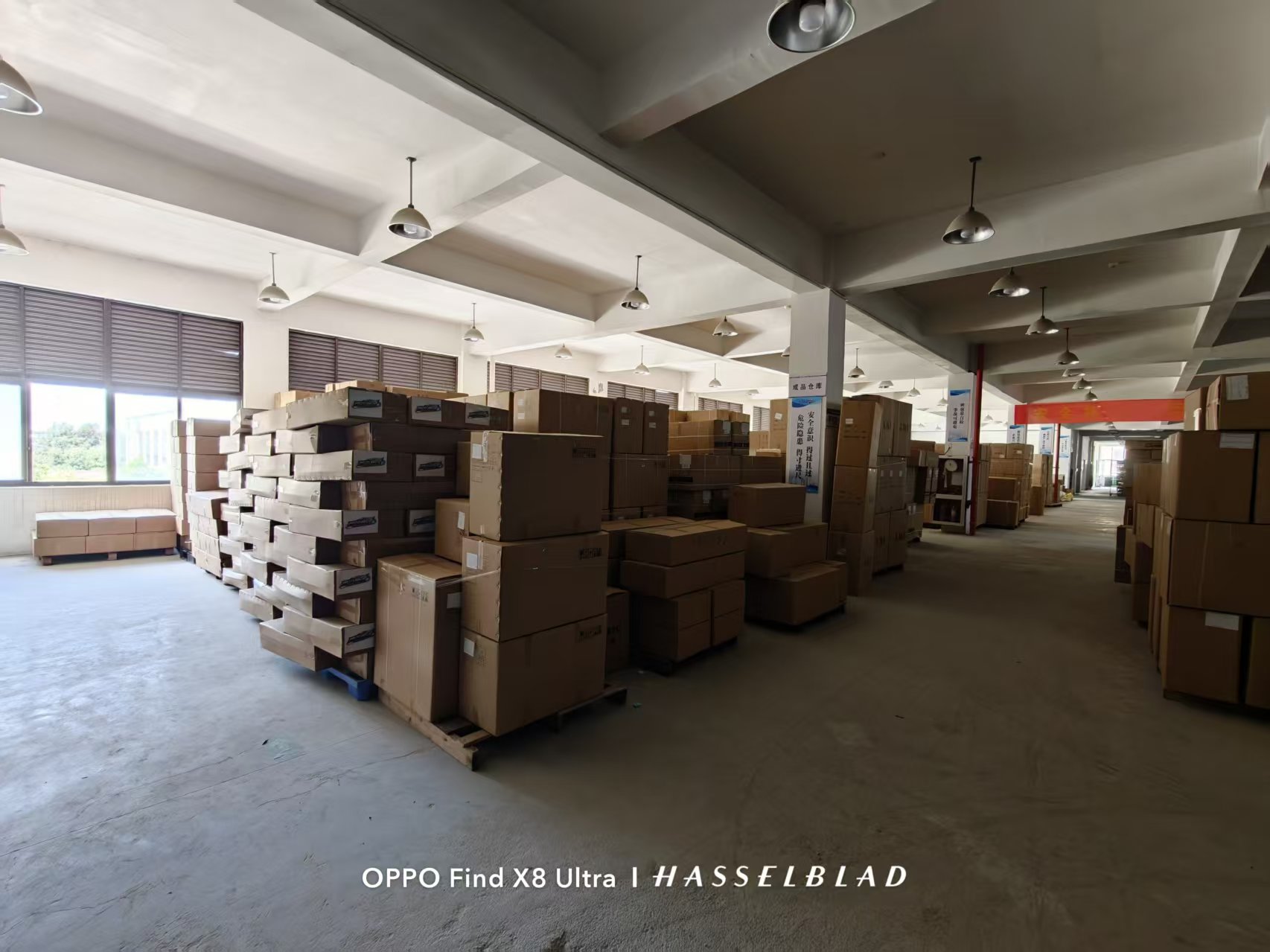
Acceptance criteria should test the claims the supplier actually makes, not a generic checklist. Each line below maps to something in the product or capability record, which makes a deviation easier to discuss.
- Quantity and carton integrity. Count against the packing list; check carton condition before opening.
- Fitment trial. Mount at least one unit on the intended model. Check mounting points, base plate seating and any contact with the body shell.
- Base plate. Confirm the PP plate is straight, that the mounting points align with the reference sample, and that there is no distortion from packing.
- Foam. The stated construction is 80D high-density PU foam. Check compression feel and recovery against the sealed reference sample; if a numeric threshold matters to you, agree the measurement method with the supplier before production rather than after arrival.
- Cover and stitching. Check PVC leather surface for colour match, seam alignment and stitch density against the approved sample, including any customized stitching line colour.
- Waterproofing. The product is stated as waterproof. A simple surface check — water beading and running off rather than soaking in — is a reasonable first indicator, but it is not a test method. If water resistance is a contractual requirement, name the method and the acceptance level in the order.
- Appearance and finish. Confirm the visual effect against the sample under daylight, not only under warehouse lighting.
- Labelling and packaging. Verify label fields, language, barcode and carton marks against the approved artwork.
- Documentation. Confirm the pre-shipment test record and warranty document arrived with the shipment and reference the correct order number.
Where these checks pay off
Repair shops and parts retailers. With a stated minimum order of 50 pieces and a 25–35 day lead time, a small buyer can hold a mixed-model stock without committing to a container. The compliance work for this buyer is light but not optional: the fitment declaration and the invoice description do most of the protective work.
Accessory brands using OEM or ODM. Logo branding, leather cover design and stitching line colour are the customization levers in the supplier's capability record. A brand buyer should attach the approved artwork and colour references to the specification, and treat the sealed sample as the controlling document.
Regional distributors. A distributor running a multi-country territory needs one specification that survives several markets. The practical approach is to specify to the strictest destination in the territory and document the destination grouping in the file, rather than maintaining separate specification revisions per country.
Motorcycle manufacturers and assemblers. For a production-line buyer, consistency between batches matters more than any single certificate. The 90% self-production rate and the documented quality system are the relevant signals here, and the pre-shipment record is the evidence that the system operated on this order.
Frequently asked questions
Does ISO9000 or CQC certification mean a motorcycle seat can be exported to any market?
No. Both certificates describe the supplier's management system within a defined scope; neither is a destination-market approval for a specific product. Market access depends on the importing country's requirements for the product category and on how the shipment is classified, and those have to be confirmed separately by the importer, a customs broker or an accredited laboratory. A certificate is useful evidence about how the factory controls quality. It is not a substitute for a product-level conformity check, and treating it as one is the most common compliance mistake in this category.
What OEM and ODM changes can be made to a motorcycle seat order?
The supplier's capability record lists OEM and ODM production with customization in three areas: logo branding, leather cover design and stitching line colour. These are appearance and identity changes applied to the existing seat construction — PP base plate, PU foam, PVC leather, 80D high-density foam and a high-strength floor structure — rather than a redesign of the frame interface. A buyer requiring a different base plate geometry or a new model fitment should raise it as a separate engineering request, because the stated fitment list covers Nmax, Xmax, Aerox, ADV150, ADV160, Forza, PCX and Click, and anything outside that list needs its own confirmation.
What is the minimum order quantity, and what drives the cost of a seat order?
The stated minimum order quantity is 50 pieces, with a stated production lead time of 25–35 days. Unit pricing is quoted per order and is not published in the material available for this guide, so any figure here would be invented. What a buyer can do is control the variables that drive a quotation: the model mix and number of variants, the customization scope (logo, leather design, stitching colour), the specification level of the cover and foam, the packaging and labelling format, and the destination. Bundling several models into one order usually changes the commercial picture more than negotiating a single line item.
How can a buyer validate a seat before the full order ships?
Validation runs in two stages. First, approve a physical reference sample and seal it with the supplier, with the specification revision written on the label. Second, use the stated 100% pre-shipment testing as the production-stage control, and ask in advance what is checked on every unit and in what format the record is issued. For a first order, an independent inspection read against the agreed criteria adds a second pair of eyes. Sample pricing and sample lead time are not stated in the available material and should be requested directly when the sample is arranged.
How long does production take, and what can extend it?
The stated lead time is 25–35 days, and the stated annual capacity is 1.8 million seat cushions, which is a large enough base that capacity is rarely the binding constraint on a mid-sized order. What usually extends a timeline is not production speed but unresolved inputs: fitment confirmation for a model outside the eight listed, artwork approval for logo or stitching customization, a late decision on packaging and labelling, or a destination requirement discovered after the order was placed. Closing the document set described above before the purchase order removes most of those delays. The stated 1-year warranty then runs from delivery on the terms agreed in writing. Buyers who want the full construction and model reference in one place can download the STARON seat cushion catalogue, and can raise destination-specific questions through the company's published contact channels.
Conclusion
Motorcycle seat compliance is not one document. It is two layers that have to be closed separately: a supplier layer, evidenced by ISO9000 quality management system certification and CQC certification within a defined scope, and a product layer, decided by the destination market and by how the shipment is classified. Buyers who collapse the two into a single question end up with a certificate that satisfies nobody at the border.
The workable sequence is short. Classify the product. Confirm the destination requirement yourself. Verify the certificates against their scope and dates. Lock the specification and the fitment in writing. Agree acceptance criteria and a sealed reference sample before production. Read the pre-shipment record against those criteria. Keep the whole file with the shipment.
For a supplier like Zhejiang Xingrong Auto & Motorcycle Parts Co., Ltd., the evidence available to a buyer is concrete and checkable: stated ISO9000 and CQC certification, a 90% self-production rate for accessories, 100% pre-shipment testing, a 1-year warranty, OEM/ODM customization, a 50-piece minimum and a 25–35 day lead time. None of it removes the need for the buyer's own destination check. All of it makes that check faster, because the supplier side of the file can be assembled before the conversation about price begins.
Have Questions or Need More Details?
Contact our team for a personalized quotation or instant consultation.
Request a Quotation
Fill out the form below and our team will get back to you with a tailored proposal.
WhatsApp Direct Chat
Prefer to chat in real-time? Message us on WhatsApp for instant assistance & quick answers.
- Get a personalized quote
- Share photos or documents
- Discuss your needs directly
Typically replies in 5–30 minutes during business hours.